
Fine Art Portraits: Everything You Need to Know
Over 80 percent of people believe a fine art portrait is just a realistic picture of a person, but that simple idea misses what truly sets this art form apart. Fine art portraits tell stories, uncover hidden emotions, and turn familiar faces into compelling statements of identity. By understanding the real depth behind these creations, you can appreciate how artists move beyond surface details to capture something unforgettable in every brushstroke.
Table of Contents
- Defining Fine Art Portraits And Misconceptions
- Major Types Of Fine Art Portraits Explained
- Essential Qualities And Creative Techniques
- Commissioning And Creating Custom Portraits
- Common Pitfalls And How To Avoid Them
Key Takeaways
| Point | Details |
|---|---|
| Nature of Fine Art Portraits | Fine art portraits capture emotional essence and storytelling rather than merely physical likeness. They reflect diversity in style and techniques, emphasizing deeper human experience. |
| Types of Portraits | Key categories include individual, group, self-portraits, historical, and psychological portraits, each offering unique narratives and perspectives. |
| Commissioning Process | When commissioning portraits, focus on selecting an appropriate artistic style and ensure high-quality source materials to convey emotional depth. |
| Common Challenges | Avoid pitfalls such as failing to capture true essence, using poor source materials, and mismatching artistic style with subject character to maintain emotional integrity in portraits. |
Defining Fine Art Portraits and Misconceptions
A fine art portrait represents far more than a simple visual representation of a person. According to hrm.org, portraiture is an artistic genre designed to capture not just physical appearance, but the emotional essence and historical context of the subject.
Contrary to popular belief, fine art portraits are not uniform or standardised. arxiv.org highlights the remarkable diversity within portrait artwork, demonstrating that these pieces can vary dramatically in style, technique, and interpretation. Artists approach portraiture as a complex form of storytelling, using visual elements to communicate deeper narratives about identity, personality, and human experience.
Key characteristics that distinguish fine art portraits include:
- Emotional depth beyond physical likeness
- Artistic interpretation of the subject
- Contextual storytelling through visual composition
- Technical mastery of chosen artistic medium
- Ability to reveal something profound about the subject’s inner world
The role of artists in custom portraits extends far beyond mere technical skill. These creative professionals transform photographs into meaningful artistic expressions that capture personality, mood, and individual essence. Whether working in oils, watercolours, digital media, or mixed techniques, they translate visual information into powerful emotional experiences.
Major Types of Fine Art Portraits Explained
Fine art portraits are remarkably diverse, with multiple categories reflecting different artistic approaches and intentions. According to school-education.ec.europa.eu, portraits can be categorised based on the number of subjects depicted, ranging from individual to group compositions, each offering unique storytelling possibilities.
Artistic styles dramatically transform portrait representations. arts.ok.gov highlights three pivotal portrait styles that demonstrate this artistic variation: Cubism, Impressionism, and Surrealism. Each style provides a distinct lens through which artists interpret human form and emotion, challenging traditional representational techniques.
The primary types of fine art portraits include:
- Individual Portraits: Focusing on a single subject’s essence
- Group Portraits: Capturing interpersonal dynamics and relationships
- Self-Portraits: Artists exploring personal identity and introspection
- Historical Portraits: Documenting significant individuals and their societal contexts
- Psychological Portraits: Revealing inner emotional landscapes
For those interested in exploring portrait artistry further, our guide on custom portraiture provides deeper insights into how contemporary artists approach these fascinating visual narratives. Each portrait style represents a unique dialogue between artist, subject, and viewer, transforming simple representations into profound artistic statements.
Essential Qualities and Creative Techniques
Portrait artistry transcends mere physical representation, diving deep into the nuanced realm of emotional storytelling. According to hrm.org, the essence of a powerful portrait lies in its ability to capture not just appearance, but the subject’s emotions, interests, and broader historical context.
arts.ok.gov reveals how different artistic styles employ unique creative techniques to transform portraits. Cubist approaches deconstruct form, Impressionist methods play with light and color, while Surrealist techniques challenge perceptual boundaries, each offering a distinctive lens for interpreting human complexity.
Key creative techniques in fine art portraiture include:
- Emotional Layering: Revealing psychological depth
- Contextual Storytelling: Embedding historical and personal narratives
- Experimental Media: Blending traditional and contemporary materials
- Symbolic Representation: Using visual metaphors to communicate inner worlds
- Dynamic Perspective: Challenging traditional representational methods
For those eager to explore the intricate world of portrait creation, our guide on custom portraiture offers deeper insights into how artists transform visual experiences into profound artistic statements. Each technique represents a unique dialogue between creative vision and human complexity.
Commissioning and Creating Custom Portraits
Commissioning a custom portrait is an intimate artistic journey that transforms personal memories into lasting visual narratives. According to arts.ok.gov, the process requires careful consideration of the subject’s unique characteristics and the desired artistic expression, ensuring the final piece captures more than just physical appearance.
The creation of a custom portrait involves multiple critical stages of collaboration between the artist and client. This intricate process begins with selecting the right artistic style, choosing appropriate source materials, and discussing the emotional resonance you want the portrait to convey. Artists carefully analyse visual references, considering lighting, composition, and the subtle nuances that transform a simple image into a profound artistic statement.
Key considerations when commissioning a custom portrait include:
- Artistic Style Selection: Matching the portrait’s aesthetic to your personal vision
- Source Material Quality: Providing clear, meaningful photographic references
- Emotional Depth: Communicating the intended mood and narrative
- Medium Exploration: Choosing between oils, watercolours, digital, or mixed media
- Personal Consultation: Engaging directly with the artist’s creative process
For those ready to begin their portrait journey, our guide on ordering custom portraits provides a comprehensive roadmap to transforming cherished moments into timeless artistic masterpieces. Each portrait represents a unique dialogue between artistic vision and personal memory.

Common Pitfalls and How to Avoid Them
Portrait creation is an art form fraught with potential challenges that can compromise the emotional integrity of the final piece. hrm.org emphasizes that the most critical pitfall is failing to capture the subject’s true essence, which requires far more than technical skill and demands deep emotional intelligence and careful observation.
arts.ok.gov highlights technical challenges that can undermine a portrait’s effectiveness, particularly issues with proportion, perspective, and color balance. These technical nuances can transform a potentially powerful portrait into a mere superficial representation if not handled with precision and artistic sensitivity.
Common pitfalls to be aware of include:
- Overlooking Emotional Depth: Focusing solely on physical likeness
- Poor Source Material: Using low-quality or inappropriate reference images
- Mismatched Artistic Style: Selecting a style incompatible with the subject’s character
- Insufficient Communication: Failing to establish clear artistic vision with the creator
- Unrealistic Expectations: Expecting photographic precision from artistic interpretation
For those navigating the complex world of portrait creation, our creative ideas for portrait inspiration offers valuable guidance on avoiding these common mistakes and ensuring your portrait truly captures the intended emotional landscape.
Transform Your Memories into Timeless Fine Art Portraits
The journey to a truly exceptional fine art portrait starts with capturing the emotional depth and personal story behind each image. If you have found yourself wanting more than just a photograph, but a meaningful artistic expression that reveals the essence of your loved ones, our expertise can help. At The Family Portrait Company, we understand the challenges of selecting the right artistic style and communicating your vision clearly so your portrait resonates with genuine feeling.
Explore our custom portrait collection and begin your personal collaboration today. With a focus on emotional layering and creative storytelling, we transform your photos into heartfelt art pieces you can cherish forever. Don’t wait to immortalise your memories through bespoke fine art portraits crafted just for you.
Frequently Asked Questions
What makes fine art portraits different from traditional portraits?
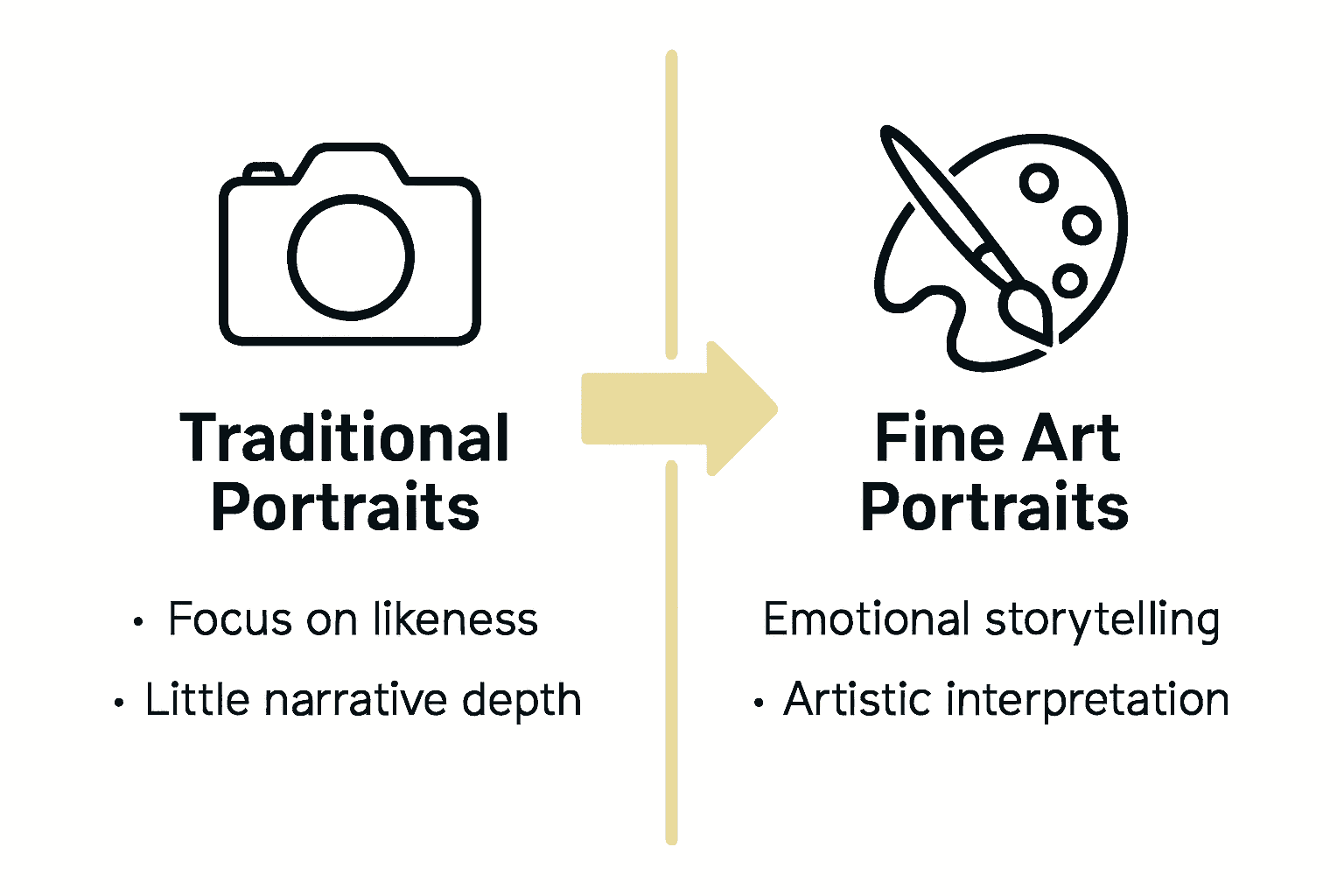
Fine art portraits focus on capturing the emotional essence and deeper narratives of the subject, rather than just their physical likeness. They incorporate artistic interpretation and contextual storytelling that reveal a person’s identity and inner world.
What are the main types of fine art portraits?
The main types include individual portraits, group portraits, self-portraits, historical portraits, and psychological portraits. Each type offers unique perspectives and storytelling possibilities, reflecting different artistic approaches.
How can I ensure emotional depth in a custom portrait?
To ensure emotional depth, communicate your intended mood and narratives clearly with the artist. Discuss the subject’s personality, interests, and any significant context that you would like to be reflected in the portrait.
What are common pitfalls to avoid when commissioning a portrait?
Common pitfalls include overlooking emotional depth, using poor source materials, mismatched artistic styles, insufficient communication with the artist, and having unrealistic expectations regarding the portrait’s outcome.
Recommended
- Portrait Creation Process: Everything You Need to Know – The Family Portrait Companys
- What Is Custom Portraiture? Complete Expert Overview – The Family Portrait Companys
- Portrait Process Explained: Complete Guide (UK) – The Family Portrait Companys
- Role of Artists in Custom Portraits: Complete Guide – The Family Portrait Companys