
How to Choose Pet Portrait Style for Custom Artwork
Every british pet owner wants artwork that truly captures the spirit of their furry companion. Choosing the right portrait style means more than just picking a colour or frame. With over 60 percent of british households owning pets, there is a growing demand for custom portraits that feel as unique as each animal. This step by step guide will help you find the style and materials that suit your pet’s personality and your home’s character.
Table of Contents
- Step 1: Assess Your Pet’s Personality And Characteristics
- Step 2: Explore Popular Portrait Styles And Materials
- Step 3: Match Style With Your Interior And Preferences
- Step 4: Consult With The Artist For Expert Guidance
- Step 5: Review Samples And Confirm Your Selection
Quick Summary
| Key Point | Explanation |
|---|---|
| 1. Assess Your Pet’s Personality | Understand your pet’s traits to choose a portrait style that captures their essence and spirit accurately. |
| 2. Explore Artistic Styles and Media | Familiarise yourself with various portrait styles to find one that resonates with your pet’s unique characteristics and your aesthetic preferences. |
| 3. Match Portrait with Interior Design | Ensure the chosen portrait complements your home decor by considering colour schemes and existing artwork when making your selection. |
| 4. Collaborate with the Artist | Engage in consultation with the artist to communicate your vision and share details about your pet, enhancing the final artwork’s accuracy and emotional appeal. |
| 5. Review Drafts Carefully | Analyse preliminary sketches or mockups critically, ensuring they authentically capture your pet’s likeness before finalising the portrait. |
Step 1: Assess your pet’s personality and characteristics
Selecting the perfect pet portrait requires a thoughtful exploration of your animal companion’s unique essence. Understanding your pet’s distinctive traits will guide you towards a portrait style that genuinely captures their spirit and character.
Start by reflecting deeply on your pet’s most prominent personality characteristics. Are they playful and energetic, with a zoomie-loving temperament that suggests a dynamic, action-oriented portrait? Or are they more contemplative and serene, hinting at a portrait style that emphasises quiet dignity? Portraits can communicate profound emotional nuances about the subject, much like how traditional art approaches human representation.
Carefully observe your pet’s behaviours, postures, and expressions. A terrier might be best represented in a vibrant, movement-filled watercolour that captures their spirited nature, while a lazy cat might suit a soft, muted oil painting that reflects their relaxed demeanour. Consider photographing your pet in various settings to understand their most authentic moments - perhaps playing, sleeping, or showing their characteristic pose that truly represents their personality.
Pro tip: Create a mood board with snapshots of your pet in different scenarios to help the artist understand their multifaceted personality and choose the most representative portrait style.
Step 2: Explore popular portrait styles and materials
Discovering the perfect portrait style for your beloved pet requires exploring a diverse range of artistic approaches and materials that can beautifully capture their unique character. This step will help you navigate the exciting world of custom pet portraiture and find a style that truly resonates with your animal companion.
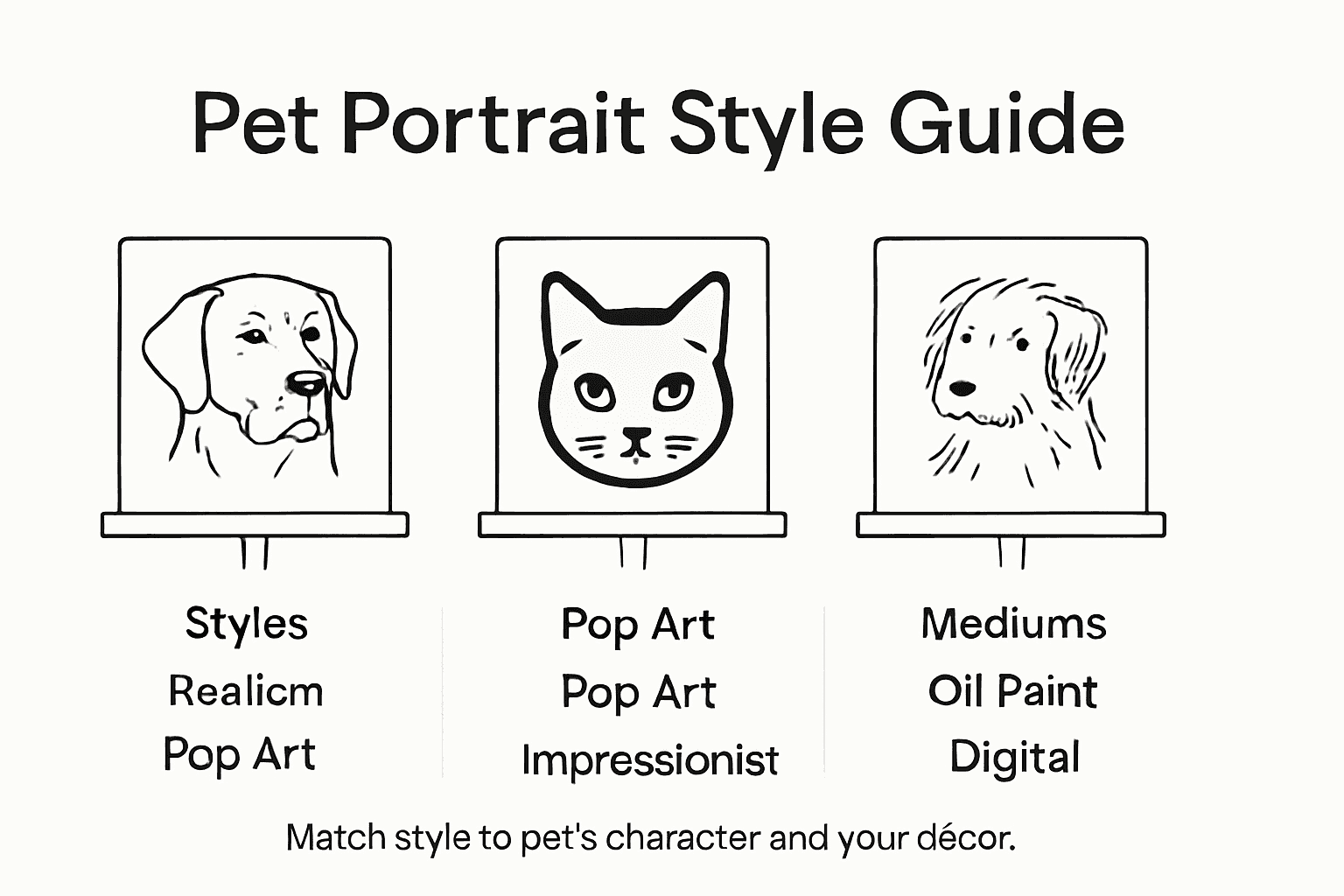
Pet portraits offer an incredible variety of artistic styles and techniques. Traditional art materials provide a rich spectrum of creative possibilities, ranging from classic oil paintings that offer rich depth and texture to delicate watercolours that capture movement and spontaneity. Consider styles like realism for precise detail, impressionist approaches for emotional interpretation, or pop art for a bold contemporary statement. Each medium brings its own magical qualities watercolour can create soft ethereal effects, while acrylic offers vibrant colour saturation and durability.
Beyond traditional painting, modern pet portraiture embraces innovative techniques including digital illustrations, mixed media collages, and even sculptural representations. Photography can also provide stunning portrait options such as high contrast black and white images or stylised digital artwork that transforms your pet’s photograph into an artistic masterpiece. Your choice should reflect both your personal aesthetic preferences and your pet’s distinctive personality.
Here is a summary comparing popular artistic approaches for pet portraits:
| Style | Key Qualities | Best Suited For |
|---|---|---|
| Realism | High detail, lifelike finish | Owners wanting true likeness |
| Impressionism | Expressive, emotive brushwork | Energetic or playful pets |
| Pop Art | Bright, bold colours | Modern, statement interiors |
| Digital Artwork | Versatile, easily editable | Contemporary home settings |
| Sculptural | Three-dimensional presence | Unique, tactile displays |
Pro tip: Request sample portfolios from artists to see how different styles and materials might capture your pet’s unique spirit before making a final decision.
Step 3: Match style with your interior and preferences
Selecting a pet portrait that harmonises with your living space requires thoughtful consideration of your existing interior design and personal aesthetic sensibilities. Your custom artwork should not only celebrate your beloved pet but also integrate seamlessly into your home environment.
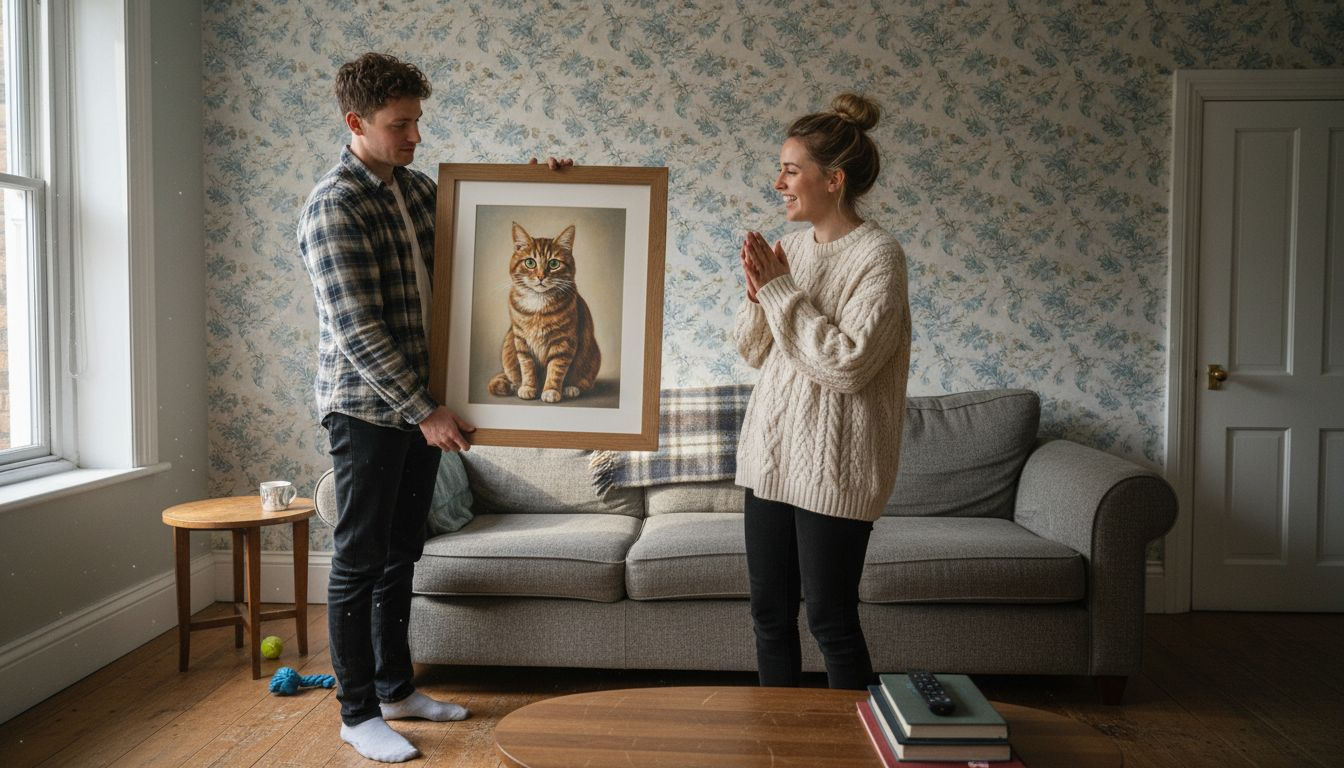
British interior design traditions offer nuanced guidance for selecting artwork that complements your space, helping you choose a portrait that feels both meaningful and visually cohesive. Consider the colour palette of your room formal spaces might benefit from classical oil paintings with rich earthy tones, while contemporary interiors could showcase bold digital illustrations or minimalist line drawings. Examine the existing artwork, furniture styles, and overall ambience of the room where your pet portrait will be displayed.
Your personal taste plays an equally crucial role in the selection process. Some pet owners prefer photorealistic representations that capture every whisker and fur texture, while others might gravitate towards abstract or impressionistic interpretations that convey emotional essence. Think about whether you want the portrait to be a statement piece that draws attention or a subtle complement to your existing decor. Consider the framing options as well wooden frames suit traditional interiors, while sleek metal or frameless canvas options work brilliantly in modern settings.
This table highlights how different styles can harmonise with typical interior design aesthetics:
| Interior Style | Ideal Portrait Type | Frame Recommendation |
|---|---|---|
| Traditional | Oil painting, realism | Ornate wood |
| Modern/Minimalist | Digital, abstract, line art | Metal or frameless canvas |
| Eclectic | Mixed media, pop art | Colourful or unique |
| Classic British | Watercolour, muted tones | Gilt or antique-inspired |
| Contemporary | High-contrast photography | Sleek black or white |
Pro tip: Take a photograph of your room and use digital editing tools to overlay potential portrait styles, helping you visualise how different artistic approaches will look in your specific space.
Step 4: Consult with the artist for expert guidance
Engaging directly with a professional artist transforms your pet portrait journey from a simple commission to a collaborative creative experience. This crucial step allows you to communicate your vision, preferences, and the unique essence of your beloved companion.
Professional artists provide invaluable insights during the portrait consultation process, helping you refine your artistic choices and capture your pet’s true character. During your initial discussion, come prepared with multiple photographs that showcase different aspects of your pet’s personality. Share stories about their quirks, favourite activities, and distinctive traits that make them special. A skilled artist will listen carefully and translate these nuanced details into artistic interpretation.
During your consultation, discuss practical elements such as preferred medium, size, background options, and potential stylistic approaches. Be open to the artist’s professional recommendations they might suggest techniques or styles you had not previously considered that could beautifully represent your pet. Ask to see their portfolio, discuss pricing transparently, and clarify the expected timeline for completion. Understanding their creative process and establishing clear communication will ensure you receive a portrait that not only meets but potentially exceeds your expectations.
Pro tip: Bring reference photographs that capture your pet’s most characteristic expressions and prepare a brief written description of their personality to help the artist create a truly personalised artwork.
Step 5: Review samples and confirm your selection
Reaching the final stage of your pet portrait journey requires careful and thoughtful review of the artist’s proposed artwork. This critical step ensures the portrait truly captures your pet’s unique essence and meets your artistic expectations.
Carefully analysing portrait samples helps you understand the nuanced details of composition and technique, allowing you to make an informed selection. Request a preliminary sketch or digital mockup from the artist that showcases their proposed approach. Examine the draft closely for key elements such as proportions, colour palette, level of detail, and emotional resonance. Pay attention to how the artist has interpreted your pet’s distinctive characteristics subtle elements like the curve of a whisker, the sparkle in their eyes, or the characteristic tilt of their head can transform a good portrait into an extraordinary one.
During your review, consider the artwork from multiple perspectives. View the sample in different lighting conditions and at various distances to understand how the portrait will appear in your home. Trust your instincts but also remain open to the artist’s professional perspective. If something does not quite feel right, communicate your concerns constructively. A skilled artist will be receptive to feedback and willing to make adjustments that ensure the final piece meets your vision. Request any necessary refinements with specific, clear instructions about what you would like changed.
Pro tip: Create a side by side comparison of the draft artwork with your reference photographs to ensure the portrait captures your pet’s true spirit and physical characteristics.
Discover Your Perfect Pet Portrait Style with The Family Portrait Company
Choosing the right style for your pet’s portrait can feel overwhelming when you want to truly capture their unique personality and the spirit of your home. The challenge lies in balancing your pet’s distinctive traits with artistic style and interior harmony. From assessing playful behaviours to selecting colours and frames that complement your living space, there are many factors that need a caring and expert touch.
At The Family Portrait Company you can access custom pet portraits tailored to your preferences and personality insights. Our talented artists work with a variety of styles ranging from lifelike realism to bold contemporary digital art, ensuring your pet’s character shines through. Benefit from expert guidance and sample reviews to make your decision confidently and enjoy a seamless collaborative experience.
Ready to bring your beloved pet’s essence to life in the perfect portrait? Explore our collection of Custom Pet Portraits to find styles and mediums that resonate with your vision. Visit The Family Portrait Company today and start the journey to a one-of-a-kind artwork that celebrates your animal companion forever.
Frequently Asked Questions
How can I assess my pet’s personality to choose the right portrait style?
Understanding your pet’s personality is crucial. Observe their behaviours, postures, and expressions, and take note of their dominant traits, such as being playful or calm. Photograph your pet in various settings to help convey their essence to the artist.
What are the most popular styles for custom pet portraits?
Popular styles for custom pet portraits include realism, impressionism, pop art, and digital artwork. Explore these styles to find one that not only resonates with your aesthetic preferences but also reflects your pet’s personality and energy.
How do I match a pet portrait style with my home decor?
To match a pet portrait style with your home decor, consider your interior’s existing colour palette and artistic themes. Think about whether you desire the artwork to be a statement piece or a subtle complement, and choose a style that harmonises with your space.
What should I discuss with the artist during the consultation?
In your consultation with the artist, discuss your vision, preferred style, medium, and background options. Share detailed stories and photographs of your pet, as well as any specific traits you want captured, to ensure the artist understands your expectations.
How can I review and provide feedback on the artist’s draft?
When reviewing the draft provided by the artist, examine elements like proportions and colour palette carefully. Provide constructive feedback, specifying any adjustments you would like, to help the artist refine the portrait until it meets your satisfaction.
What are some tips for creating a mood board for my pet’s portrait?
To create a mood board for your pet’s portrait, gather photographs that showcase your pet in various moods and situations. Include images that evoke the style and colours you envision for the portrait, helping the artist grasp your aesthetic preferences and your pet’s unique character.
Recommended
- Understanding Pet Portrait Styles Explained for Pet Owners – The Family Portrait Companys
- Complete Guide to Selecting Artist for Pet Portraits – The Family Portrait Companys
- 7 Top Pet Portrait Styles Every Family Should Know – The Family Portrait Companys
- Ordering Pet Portraits Online Guide for UK Pet Owners – The Family Portrait Companys