
Difference Between Portrait Types: Choosing Pet Art
Choosing the right portrait style for your beloved companion can feel like a real challenge when each pet has their own quirks and charm. Many British pet owners want more than just a picture—they seek art that reveals personality and character as well as physical likeness. With both traditional and contemporary portrait types offering everything from lifelike detail to expressive pops of colour, understanding these styles helps you spotlight what makes your pet unforgettable.
Table of Contents
- What Defines A Portrait Type?
- Traditional Styles: Realism And Classic
- Contemporary Approaches: Digital And Pop Art
- Comparing Key Features And Techniques
- Mistakes To Avoid When Choosing Styles
Key Takeaways
| Point | Details |
|---|---|
| Portrait Types Are Multifaceted | Portraiture involves more than mere visual accuracy; it embodies emotional narratives and artistic intentions. |
| Understanding Traditional vs. Contemporary Styles | Traditional realism focuses on precise representation, while contemporary styles like digital and pop art embrace creativity and cultural commentary. |
| Choosing the Right Portrait Style | Selecting a style should align with the subject’s personality and the emotional narrative intended to be conveyed. |
| Avoiding Common Selection Mistakes | Ensure the chosen portrait style complements both the pet’s essence and your living space to enhance its impact. |
What Defines a Portrait Type?
Portraiture is a complex art form with nuanced definitions that extend far beyond simple representation. Philosophical theories about portraiture reveal that a portrait transcends mere visual reproduction, embodying deeper artistic intentions and subjective interpretations.
At its core, a portrait type is characterised by several fundamental elements:
- Subject Representation: The primary focus and emotional essence of the subject
- Artistic Style: The unique visual approach and aesthetic technique
- Technical Medium: The specific materials and methods used in creation
- Emotional Narrative: The underlying story or psychological context communicated
Traditionally, portrait creation balances faithfulness with creative expression, creating a delicate interplay between objective accuracy and artistic interpretation. This means a portrait isn’t just about capturing physical likeness, but revealing intrinsic qualities, personality, and emotional depth.
Understanding portrait types requires recognising that each style communicates differently. A photorealistic pet portrait communicates precision, while an impressionistic rendering might highlight emotional texture and movement. The artist’s choice of portrait type becomes a language of visual storytelling.
Pro tip: When selecting a portrait type, consider not just the subject’s appearance, but the emotional narrative you wish to convey.
Traditional Styles: Realism and Classic
Realism in portraiture represents a profound artistic approach that captures subjects with meticulous precision and emotional depth. Classical art traditions emerged as a powerful movement celebrating technical mastery and aesthetic beauty, emphasising the intricate skills of artistic representation.
The core characteristics of traditional realistic portraiture include:
- Precise Draftsmanship: Capturing exact physical details
- Emotional Authenticity: Revealing inner character and psychological nuance
- Technical Sophistication: Demonstrating advanced artistic technique
- Historical Continuity: Maintaining connections with classical artistic principles
Renaissance portraiture techniques revolutionised artistic representation, transforming portraits from mere visual records into profound psychological statements. Masters like Leonardo da Vinci and Rembrandt understood that true realism transcends physical likeness, delving into the subject’s essential character and inner world.
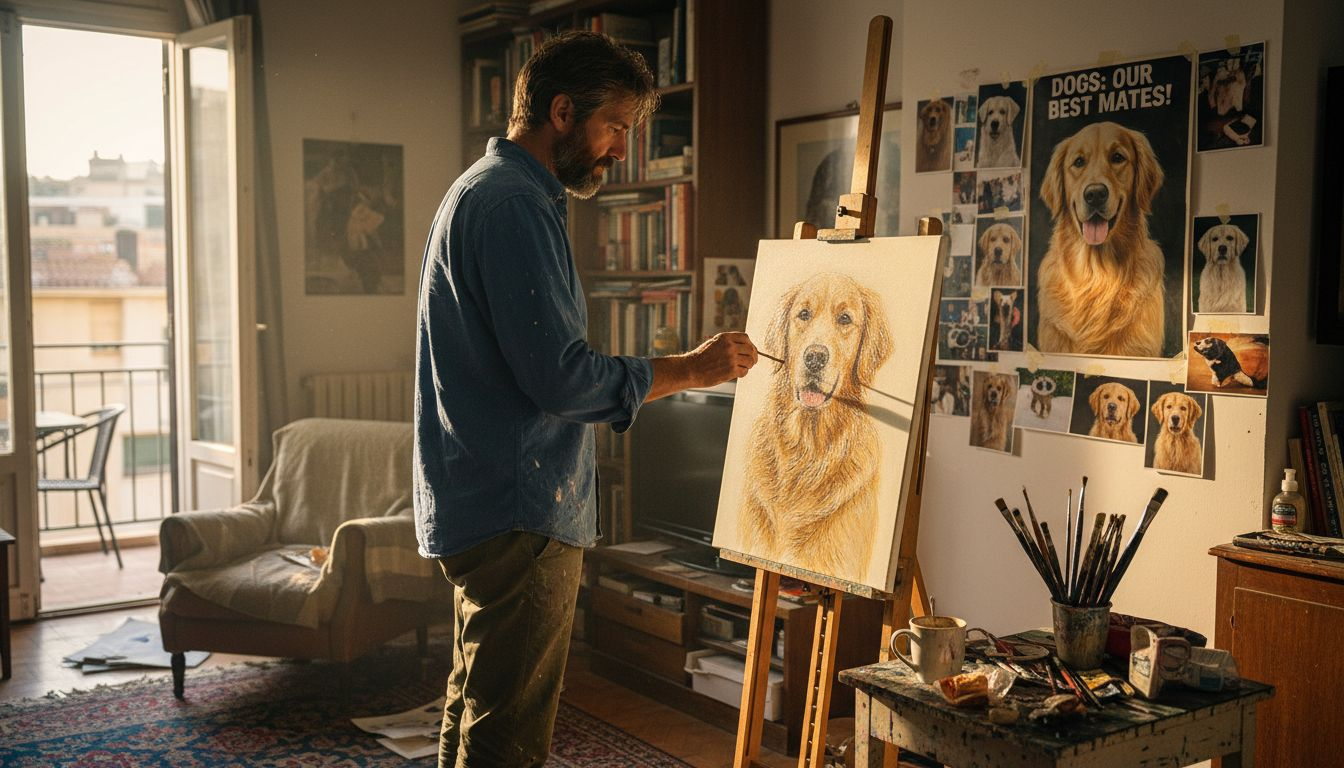
Traditional realistic styles demand extraordinary technical skill, requiring artists to balance objective observation with nuanced emotional interpretation. A realistic pet portrait, for instance, doesn’t just reproduce fur and features, but captures the animal’s unique spirit, personality, and individual essence.
Pro tip: When commissioning a realistic portrait, request to see the artist’s technical portfolio to assess their ability to capture both physical accuracy and emotional depth.
Contemporary Approaches: Digital and Pop Art
Digital portraiture represents a radical transformation in artistic expression, breaking traditional boundaries of representation. Pop art’s evolution in digital design has dramatically reshaped how we perceive and create artistic portraits, incorporating technology and popular culture elements.
Key characteristics of contemporary digital and pop art portraiture include:
- Technological Integration: Leveraging digital tools and software
- Cultural Commentary: Embedding social and media references
- Experimental Techniques: Blending traditional and digital methods
- Accessibility: Democratising artistic creation through digital platforms
Contemporary portrait techniques now extend beyond mere visual representation, exploring complex psychological and cultural narratives. Digital tools enable artists to deconstruct traditional portraiture, creating multilayered representations that challenge viewers’ perceptions.
These modern approaches transform pet portraiture into a dynamic art form. Unlike traditional styles, digital and pop art portraits can playfully reimagine an animal’s essence, using vibrant colours, graphic elements, and multimedia techniques to capture personality beyond physical likeness.
Here’s how traditional and contemporary portrait styles compare in purpose and impact:
| Aspect | Traditional Realism | Digital & Pop Art |
|---|---|---|
| Purpose | Capture authentic likeness | Express creative reinterpretation |
| Artistic Impact | Reveal psychological depth | Challenge visual conventions |
| Audience Engagement | Inspire admiration for technique | Evoke emotional reactions |
| Longevity | Timeless, classic appeal | Dynamic, adaptable over time |
Pro tip: When exploring digital portrait styles, consider the emotional narrative you want to convey and how different digital techniques can enhance that story.
Comparing Key Features and Techniques
Artistic portraiture encompasses a rich spectrum of techniques, each with distinct characteristics and creative approaches. Portraiture’s evolution across artistic mediums reveals a fascinating interplay between traditional mastery and contemporary innovation.
Key comparative features across portrait styles include:
- Technical Complexity: Range from intricate brushwork to digital manipulation
- Emotional Depth: Varying levels of psychological representation
- Stylistic Interpretation: From hyper-realistic to abstract expressions
- Technological Integration: Spectrum from classical techniques to digital tools
Portrait photography approaches demonstrate significant transformations in artistic representation. Traditional methods emphasised controlled environments and formal compositions, while contemporary techniques prioritise spontaneity, environmental context, and personal narrative.
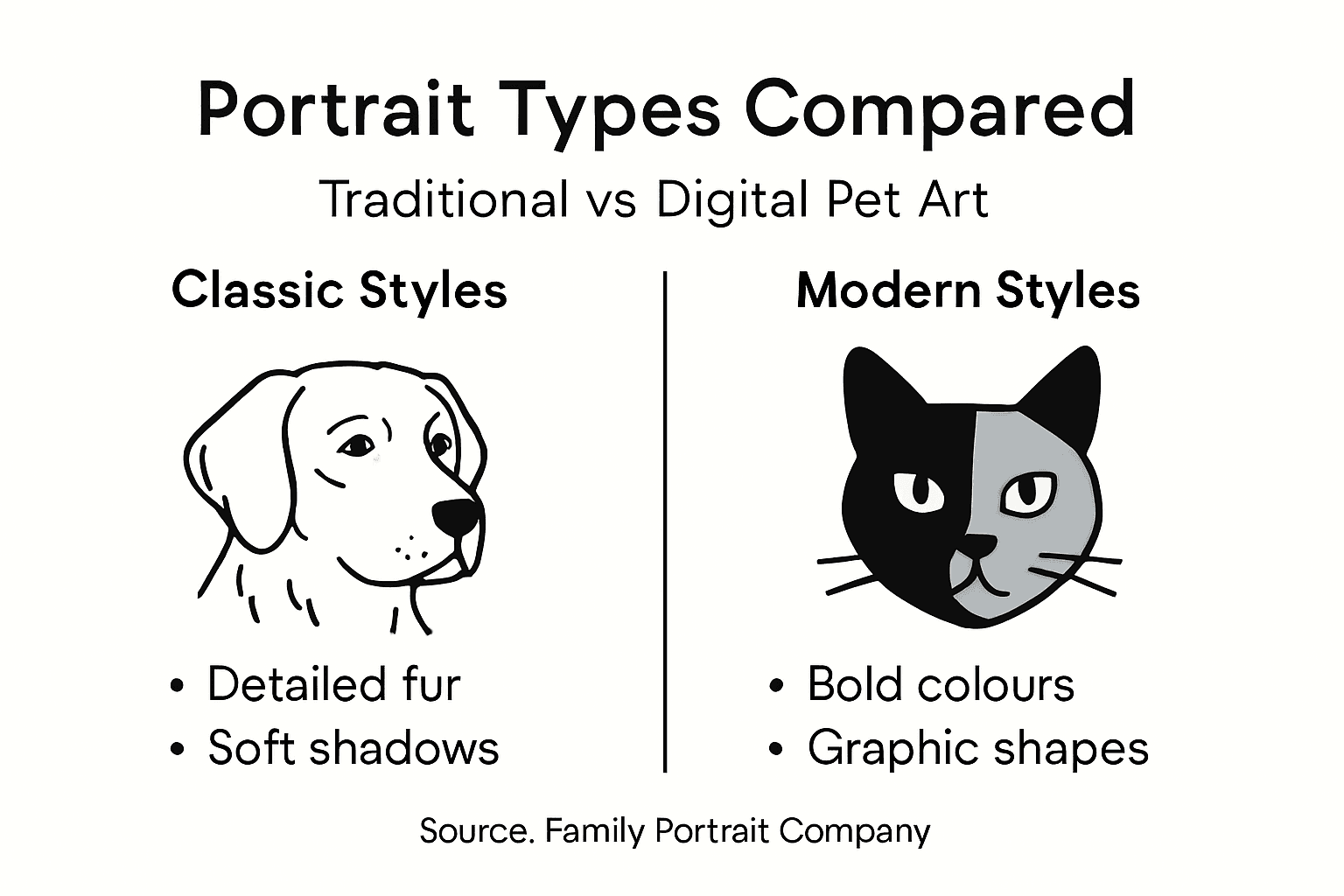
Each portrait style offers unique advantages in capturing an animal’s essence. Realistic approaches provide precise anatomical details, digital methods allow creative reinterpretation, and pop art techniques can transform a pet’s image into a vibrant cultural statement. The choice ultimately depends on the emotional story you wish to communicate.
Pro tip: Select a portrait style that not only represents your pet’s physical appearance but also captures their unique personality and spirit.
Mistakes to Avoid When Choosing Styles
Pet portrait selection requires careful consideration to ensure your artwork truly captures your animal companion’s unique spirit. Common portrait photography errors can significantly compromise the emotional impact and technical quality of your chosen style.
Critical mistakes to avoid when selecting a pet portrait style include:
- Mismatched Aesthetic: Choosing a style that doesn’t reflect your pet’s personality
- Technical Limitations: Overlooking an artist’s skill in your preferred medium
- Poor Composition: Neglecting background and framing elements
- Inappropriate Scale: Selecting a size that doesn’t complement your space
- Colour Incompatibility: Ignoring how the portrait’s palette integrates with your home decor
Portrait style selection techniques emphasise the importance of understanding both technical and emotional dimensions. A digital pop art rendering might energise a modern living space, while a classical realistic portrait could suit a more traditional interior. The key is aligning artistic representation with your emotional connection to your pet.
Technical considerations matter immensely. A poorly executed portrait can diminish your pet’s character, regardless of the chosen style. Ensure you review an artist’s portfolio thoroughly, examining their ability to capture nuanced expressions, maintain proportional accuracy, and convey genuine personality.
Consider these key factors when choosing a pet portrait style for your space:
| Factor | Why It Matters | Questions to Ask the Artist |
|---|---|---|
| Lighting | Affects portrait visibility | What lighting is recommended? |
| Wall Colour | Influences colour harmony | Will the palette complement? |
| Room Function | Determines emotional tone | Can style fit the atmosphere? |
| Framing Options | Enhances overall effect | What frames best suit the work? |
Pro tip: Request multiple style samples from your chosen artist to ensure the portrait truly captures your pet’s essence before committing to the final artwork.
Discover the Perfect Pet Portrait Style for Your Home
Choosing the ideal pet portrait style can feel overwhelming with so many options that balance technique, emotional depth, and artistic storytelling. Whether you prefer the timeless authenticity of traditional realism or the vibrant creativity of contemporary digital and pop art, capturing your pet’s unique spirit is key. This decision is not just about appearance but about forging a lasting emotional connection through art.
Explore our range of custom pet portraits at The Family Portrait Companys where expert artists bring your beloved companion’s personality to life with precision and heart.

Start your journey today by visiting our homepage to browse styles and request personalised samples. Act now to create a meaningful tribute that reflects your pet’s true essence with craftsmanship you can trust.
Frequently Asked Questions
What are the main characteristics of traditional portrait types?
Traditional portrait types, such as realism, focus on precise draftsmanship, emotional authenticity, technical sophistication, and historical continuity. They aim to capture not just physical likeness but also the subject’s inner character and psychological depth.
How does digital portraiture differ from traditional styles?
Digital portraiture differs from traditional styles by integrating technology and contemporary methods. It often incorporates cultural commentary and experimental techniques, allowing for creative reinterpretation and dynamic representations that challenge visual conventions.
What factors should I consider when choosing a pet portrait style?
When selecting a pet portrait style, consider your pet’s personality, the emotional narrative you wish to convey, the artist’s technical skill, and how the artwork will complement your living space in terms of scale and colour harmony.
What mistakes should I avoid when commissioning a pet portrait?
Key mistakes to avoid include mismatching the aesthetic with your pet’s personality, overlooking the artist’s technical abilities, neglecting composition, selecting an inappropriate size, and ignoring how the colour palette fits with your home decor.
Recommended
- Complete Guide to Selecting Artist for Pet Portraits – The Family Portrait Companys
- Understanding Pet Portrait Styles Explained for Pet Owners – The Family Portrait Companys
- How to Choose Pet Portrait Style for Custom Artwork – The Family Portrait Companys
- 7 Top Pet Portrait Styles Every Family Should Know – The Family Portrait Companys