

Why Pets in Children’s Portraits Deepen Family Bonds
Every parent faces that heartfelt moment when capturing family memories means choosing which members truly belong in the frame. For British families, pets are not just companions, they offer a unique form of non-judgmental companionship that often shapes children’s emotional well-being and self-esteem more than human relationships, as revealed by University of Cambridge research. Discover how custom portraits can beautifully celebrate these deep bonds, turning cherished pet-child connections into lasting family keepsakes.
Table of Contents
- What Pets in Children’s Portraits Symbolise
- Emotional Benefits for Children and Families
- Creative Ways to Include Pets in Portraits
- Navigating Practical Challenges Safely
- Common Mistakes and How to Avoid Them
Key Takeaways
| Point | Details |
|---|---|
| Pets Symbolise Emotional Support | Pets in children’s portraits represent deep emotional connections, providing non-judgmental companionship that enhances children’s psychological development. |
| Transformative Family Dynamics | Pets help reduce household stress and increase empathy, leading to stronger familial bonds and improved emotional communication. |
| Creative Portrait Techniques | Including pets requires innovative approaches that showcase genuine connections, ensuring a lasting representation of the bond shared between children and their animal companions. |
| Successful Preparation is Key | Proper planning and flexibility are crucial to navigating challenges during pet portraits, ensuring both children and pets feel comfortable and engaged throughout the session. |
What Pets in Children’s Portraits Symbolise
Pets in children’s portraits represent far more than simple companions - they symbolise profound emotional connections and developmental milestones that transcend traditional family dynamics. When a pet appears alongside a child in a portrait, it reveals intricate layers of psychological and social significance that reflect deep bonds of trust, comfort, and unconditional support.
Research from the University of Cambridge highlights that pets symbolise a unique form of non-judgmental companionship, often providing stronger emotional support than human family interactions. Pets represent emotional health benefits that contribute significantly to children’s psychological development, including:
- Increased self-esteem
- Reduced feelings of loneliness
- Enhanced social competencies
- Improved perspective-taking abilities
These symbolic representations go beyond simple pet ownership. They demonstrate how animals become integral members of a child’s emotional ecosystem, offering acceptance and friendship that help shape critical developmental experiences. By including pets in family portraits, parents capture more than a moment - they immortalise a relationship that profoundly influences a child’s emotional growth.
Pro Tip: Consider positioning your pet naturally alongside your child during portrait sessions to authentically capture the genuine connection between them.
Emotional Benefits for Children and Families
Pets play a transformative role in family dynamics, offering profound emotional support that extends far beyond simple companionship. Scientific research demonstrates significant emotional benefits for children and families, revealing how animal companions can fundamentally enhance psychological well-being and familial connections.
The emotional landscape of families with pets is characterised by several remarkable advantages:
- Reduced household stress levels
- Increased opportunities for empathy development
- Enhanced emotional communication
- Improved social competence for children
- Stronger interpersonal bonding
Through caregiving roles and unconditional relationships, pets help children develop critical emotional skills. They provide a unique form of non-judgmental support that allows children to express themselves freely, learn responsibility, and build confidence in a safe, nurturing environment. By offering consistent emotional availability, pets become more than just animals - they transform into trusted confidants and emotional anchors within the family unit.
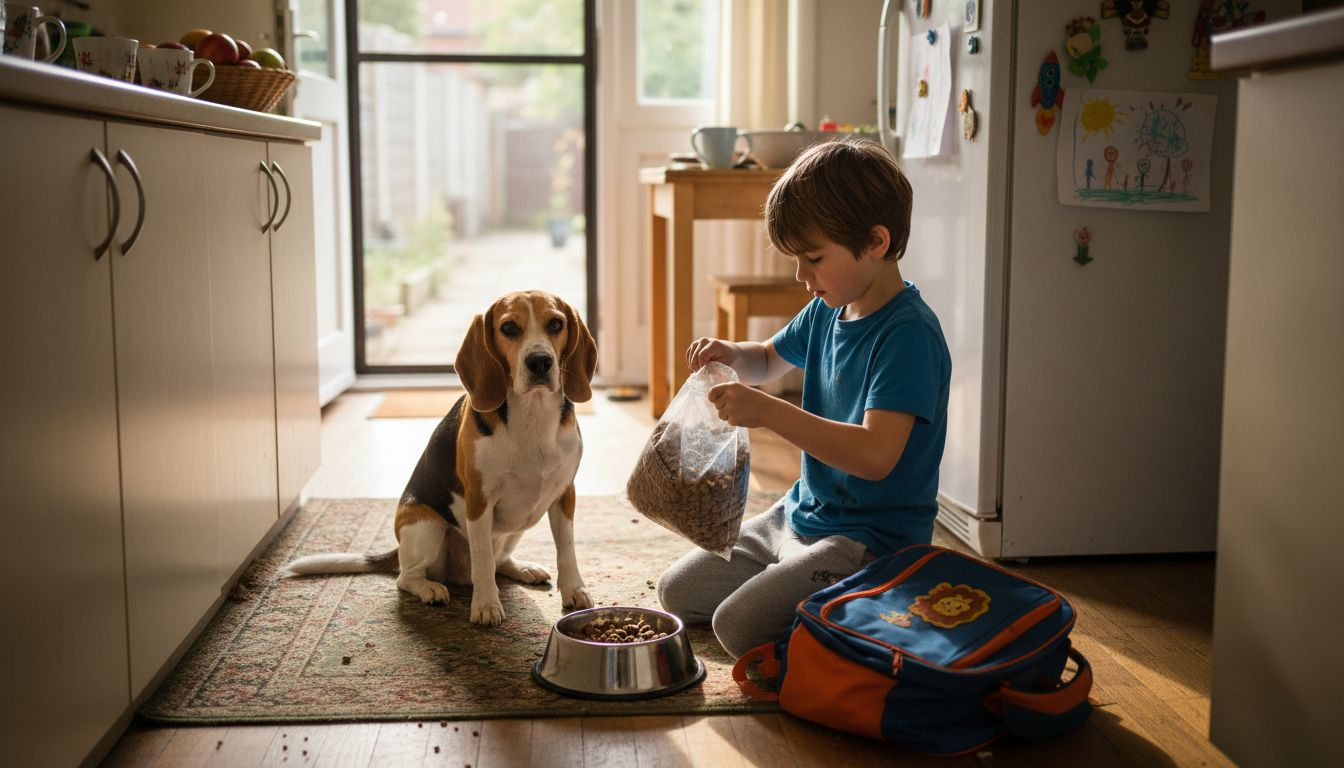
Moreover, scientific studies indicate that pets contribute substantially to children’s psychological development. Family interactions with pets help children regulate emotions, reduce feelings of loneliness, and create a supportive ecosystem that promotes mental resilience and emotional intelligence.
Here is a comparison of the unique emotional impacts pets have on children and other family members:
| Emotional Impact | On Children | On Other Family Members |
|---|---|---|
| Loneliness reduction | Pets serve as constant companions | Comfort during family stress |
| Emotional expression | Encourage open communication | Promote empathy and patience |
| Social competence | Enhance interaction with peers | Strengthen family bonds |
| Confidence development | Build self-esteem through care roles | Foster responsibility sharing |
| Stress relief | Offer reassurance and relaxation | Provide calm in daily routines |
Pro Tip: Encourage your children to interact meaningfully with pets by involving them in daily care routines to strengthen their emotional connection.
Creative Ways to Include Pets in Portraits
Including pets in children’s portraits requires imagination and a nuanced approach that celebrates the unique bond between animal companions and young family members. Artistic approaches to pet portraiture reveal multiple creative strategies for capturing the genuine emotional connection between children and their beloved animals.
Some innovative methods for incorporating pets into family portraits include:
- Matching outfits or complementary colour schemes
- Playful interaction poses highlighting mutual joy
- Candid moments showcasing natural relationships
- Themed portraits reflecting shared interests
- Side-by-side compositions emphasising companionship
Photographers and artists can capture pets’ personalities by focusing on characteristic behaviours, unique expressions, and the subtle interactions that demonstrate their integral role in family dynamics. Whether through staged professional shoots or spontaneous home snapshots, the goal is to reveal the authentic emotional landscape shared between children and their animal companions.
By approaching pet portraiture with creativity and emotional sensitivity, families can create lasting visual memories that truly represent the depth of their relationships. The portrait becomes more than a simple image - it transforms into a narrative that celebrates the unconditional love and companionship pets bring to children’s lives.
Pro Tip: Allow pets to feel comfortable during portrait sessions by incorporating their favourite toys or treating the photoshoot like a playful interaction.
The table below summarises creative approaches and practical strategies for including pets in portraits:
| Approach | Benefit | Implementation Tip |
|---|---|---|
| Matching accessories | Enhances visual harmony | Choose similar colours or patterns |
| Candid interactions | Captures authentic relationships | Encourage natural play and bonding |
| Familiar settings | Reduces anxiety for pets and children | Use favourite home or garden spaces |
| Props and toys | Maintains pet engagement | Incorporate well-loved items |
Navigating Practical Challenges Safely
Creating portraits with pets requires careful preparation and strategic planning to ensure a smooth, stress-free experience for both children and animals. Pet portrait sessions demand patience, understanding, and proactive management of potential challenges that might arise during the photographic process.
Key considerations for safely managing pet portraits include:
- Selecting familiar, comfortable environments
- Scheduling sessions around pets’ natural energy cycles
- Bringing favourite toys and treats for motivation
- Allowing breaks and maintaining a relaxed atmosphere
- Ensuring pets are well-rested and comfortable
Parents should prioritise the emotional and physical well-being of both their children and pets during portrait sessions. This means understanding each participant’s temperament, creating a supportive environment, and being prepared to adapt quickly if either the child or pet becomes overwhelmed or uncooperative.
Successful pet portraits require a delicate balance of preparation, flexibility, and genuine interaction. Professional photographers specialising in family and pet photography recommend approaching these sessions as collaborative experiences, where natural interactions are gently guided rather than strictly choreographed.
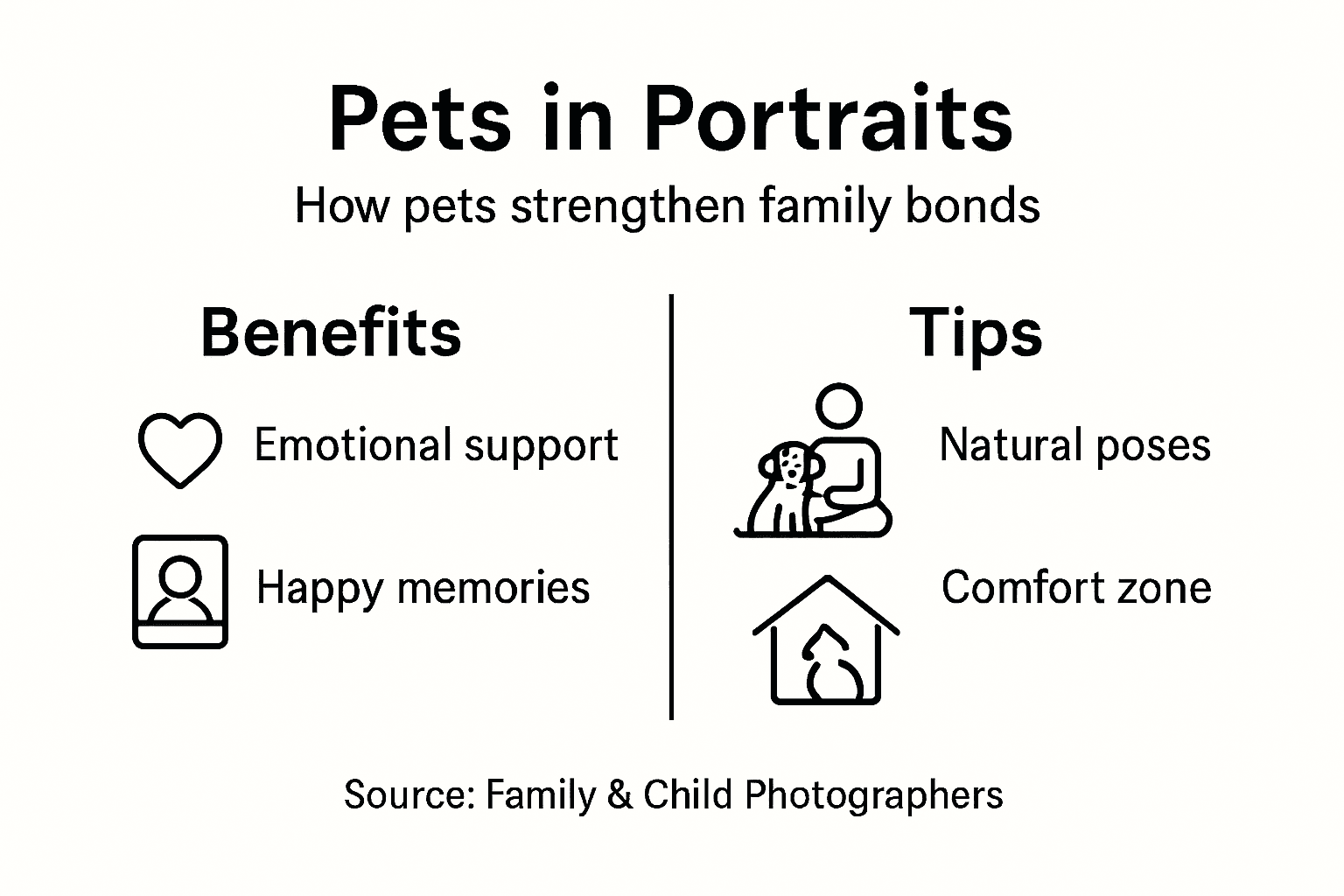
Pro Tip: Conduct a pre-shoot rehearsal at home, using treats and positive reinforcement to help pets and children feel comfortable with the portrait concept.
Common Mistakes and How to Avoid Them
Pet portrait sessions can quickly become challenging without proper preparation, and parents often encounter predictable obstacles that can derail the entire photographic experience. Anticipating potential issues becomes crucial in creating memorable, stress-free portraits that genuinely capture the bond between children and their animal companions.
Common mistakes families frequently make during pet portraits include:
- Forcing unnatural poses
- Scheduling sessions during pets’ nap or feeding times
- Neglecting pet comfort and emotional state
- Expecting immediate perfect cooperation
- Overlooking individual personality dynamics
- Using high-stress or unfamiliar environments
Successful portrait sessions require understanding that animals, like children, have unique temperaments and energy levels. Parents must approach these moments with flexibility, patience, and a keen awareness of both their child’s and pet’s emotional landscapes. This means being prepared to pause, reset, and potentially reschedule if the initial attempt proves challenging.
Photographers recommend treating portrait sessions as collaborative experiences rather than rigidly structured events. By maintaining a relaxed atmosphere, using positive reinforcement, and allowing natural interactions to unfold, families can create authentic images that truly reflect their relationships.
Pro Tip: Bring multiple treats, favourite toys, and maintain a calm, playful demeanour to help both pets and children feel comfortable during portrait sessions.
Celebrate the Special Bond Between Your Child and Pet with Custom Portraits
The article highlights the profound emotional connection children share with their pets and the importance of capturing these relationships authentically. Many parents struggle with preserving these meaningful moments that symbolise comfort, trust and emotional growth. Our custom pet and human portraits offer a beautiful solution to this challenge by transforming your favourite photos into timeless pieces that celebrate your child’s unique bond with their animal companion.

Discover how you can cherish these irreplaceable moments forever with The Family Portrait Companys. By choosing our personalised portraits, you bring to life the emotional support and joy pets bring to your family in a stunning, handcrafted artwork. Don’t wait to immortalise this deep connection. Visit our main site to start creating a treasured keepsake that grows with your family today.
Frequently Asked Questions
What are the emotional benefits of including pets in children’s portraits?
Including pets in children’s portraits can enhance emotional health by reducing feelings of loneliness, increasing self-esteem, and fostering social competencies. Pets provide non-judgmental companionship that supports children’s psychological development.
How can I creatively include my pet in family portraits?
You can creatively include your pet by using matching outfits, capturing playful interactions, and incorporating familiar settings. Candid moments and themed portraits can also highlight the bond between your child and pet.
What are common challenges when photographing children with pets?
Common challenges include forcing unnatural poses, scheduling during pets’ active times, and overlooking the comfort of both pets and children. It’s essential to create a relaxed atmosphere to capture authentic moments.
What steps can I take to ensure a successful pet portrait session?
To ensure success, select familiar environments, schedule around pets’ energy levels, bring toys and treats for motivation, and allow for breaks. Patience and flexibility are key to capturing genuine interactions.
Recommended
- Complete Guide to Why Pets Improve Family Portraits – The Family Portrait Companys
- Understanding Why Pets Deserve Portraits – The Family Portrait Companys
- Role of Pets in Family Portraits: Celebrating Connection – The Family Portrait Companys
- 7 Inspiring Examples of Human and Pet Portraits for Families – The Family Portrait Companys