

Expert Portrait Creation Tips for Lasting Pet and Family Keepsakes
Family life in the United Kingdom often revolves around cherished moments with children and beloved pets, making it especially meaningful to capture these connections in custom portraits. Selecting the right photographs is the first step toward creating a keepsake that celebrates personality and togetherness. By focusing on artistic portrait preparation, you can ensure your portrait reflects true character and emotional warmth, providing lasting memories for your household.
Table of Contents
- Step 1: Prepare Your Photos For Portrait Creation
- Step 2: Select Composition And Lighting For Best Results
- Step 3: Adjust Colours And Details To Highlight Personalities
- Step 4: Verify Quality For A Flawless Finished Portrait
- Step 5: Display And Preserve Your Custom Keepsake
Quick Summary
| Key Point | Explanation |
|---|---|
| 1. Choose high-quality images | Select clear photos with detailed facial features and natural lighting to capture the essence of your subject. |
| 2. Master composition techniques | Use visual storytelling elements, such as positioning and negative space, to create dynamic and engaging portraits. |
| 3. Pay attention to colours and details | Select colour palettes that reflect personality and include meaningful elements to enhance emotional depth. |
| 4. Verify portrait quality meticulously | Assess sharpness, colour accuracy, and emotional portrayal to ensure the finished artwork is a true representation. |
| 5. Preserve artwork properly | Use archival framing and avoid sunlight to protect the portrait’s quality for future generations. |
Step 1: Prepare your photos for portrait creation
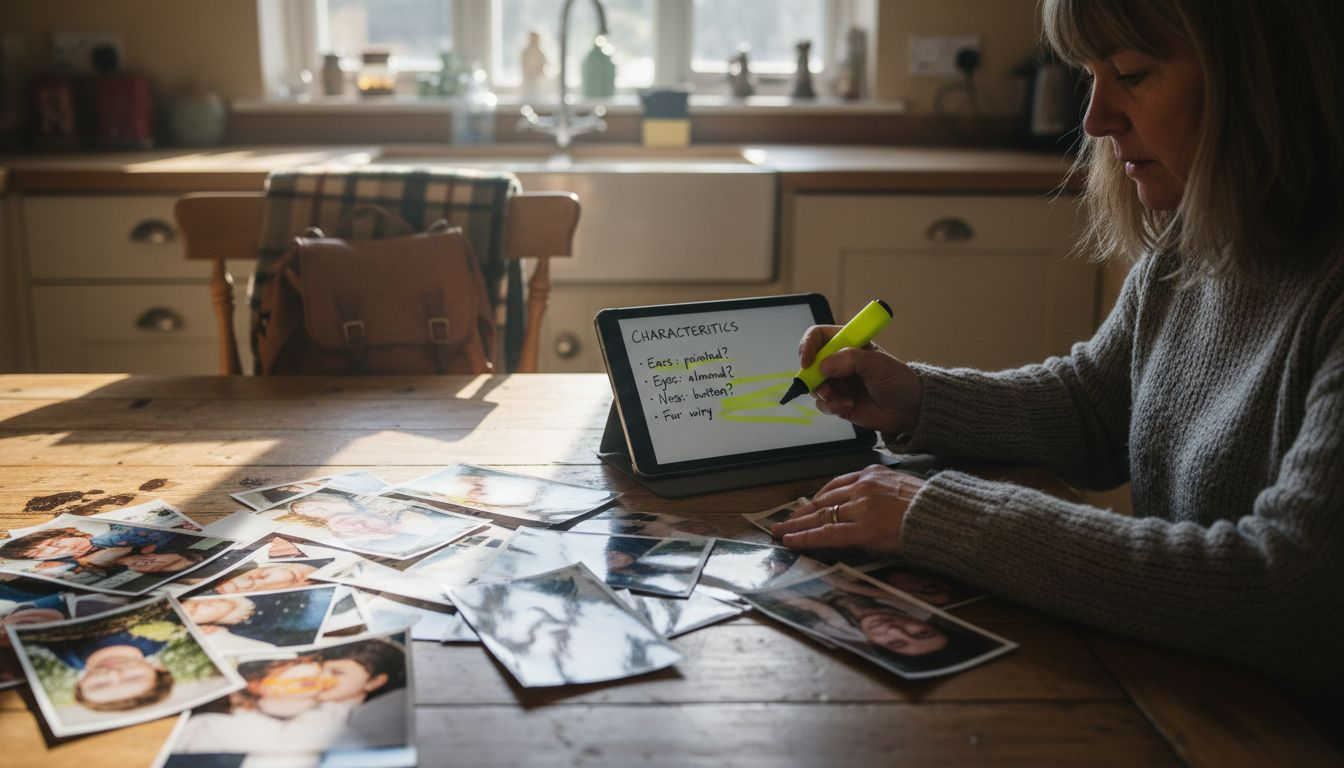
Crafting the perfect family or pet portrait begins with selecting the right photographs. The key is choosing images that not only capture emotion but also provide sufficient detail for an artist to work with effectively.
When preparing photos for portrait creation, focus on selecting high-quality, clear images that showcase your subject’s unique characteristics. Artistic portrait preparation involves carefully considering composition, lighting, and emotional expression. Consider these essential guidelines for photo selection:
- Choose images with good natural lighting
- Select photos with clear, sharp facial details
- Opt for pictures showing genuine expressions
- Ensure the subject fills at least 50% of the frame
- Pick photos with minimal background distractions
Technical considerations are equally important when preparing your photographs. Aim for high-resolution images with minimal digital noise or blurriness. Digital photos should ideally be at least 300 dpi and taken in good, consistent lighting conditions. Avoid using flash photography, which can flatten facial features and create unflattering shadows.
The most compelling portraits capture not just a likeness, but the essence of the subject’s personality.
Pro tip: Gather multiple reference photos to provide artists with a comprehensive understanding of your subject’s unique characteristics.
Step 2: Select composition and lighting for best results
Creating a stunning portrait requires more than just a good photograph - it demands a thoughtful approach to visual storytelling. Understanding how to effectively compose and illuminate your subject will transform an ordinary image into an extraordinary keepsake.
Portrait composition techniques play a crucial role in directing viewer attention and conveying emotional depth. Consider these fundamental principles for selecting the ideal composition:
- Position the subject to highlight their most engaging features
- Create visual balance by using negative space strategically
- Aim for asymmetrical compositions that feel dynamic
- Ensure the subject’s eyes are the focal point
- Use leading lines to guide the viewer’s gaze
Lighting is equally critical in portrait creation. Natural, soft light works best for capturing nuanced details and creating depth. Avoid harsh overhead lighting that can create unflattering shadows. Professional photographers recommend positioning your subject near a window with diffused natural light, which provides gentle illumination and brings out subtle facial characteristics.
Here’s a comparison of natural versus artificial lighting for portrait photography:
| Lighting Type | Advantages | Common Drawbacks |
|---|---|---|
| Natural (window) | Softens features, adds depth | Dependent on time of day |
| Artificial (studio) | Complete control over intensity | May produce harsh shadows |
| Mixed sources | Flexible mood and effects | Can lead to colour imbalances |
Masterful portraits reveal more than physical appearance - they capture the soul of the subject.
Top tip: Experiment with multiple lighting angles and compositions to discover the most flattering and emotionally resonant representation of your subject.
Step 3: Adjust colours and details to highlight personalities
Transforming a simple photograph into a meaningful portrait requires thoughtful attention to colour and personal nuances. Each visual element contributes to telling the unique story of your loved one or cherished pet.
Portrait identity through details reveals how subtle artistic choices can capture an individual’s essence. Consider these strategic approaches for bringing personality to life:
- Select colour palettes that reflect the subject’s character
- Emphasise unique facial features and expressions
- Include meaningful personal objects or backgrounds
- Use warm or cool tones to convey emotional depth
- Highlight distinctive textures and skin tones
Colour psychology plays a significant role in portrait creation. Warm colours like amber and russet can suggest intimacy and comfort, while cooler blues and greens might indicate calm or introspection. Professional artists carefully balance colour temperatures to create emotional resonance, transforming a simple image into a profound representation of personality.
A truly great portrait speaks volumes without uttering a single word.
Top tip: Consider consulting with a professional artist who can interpret the subtle emotional landscape of your chosen photograph.
Step 4: Verify quality for a flawless finished portrait
Ensuring the absolute excellence of your portrait requires a meticulous quality verification process. Your carefully crafted keepsake deserves nothing less than a comprehensive and discerning final review.
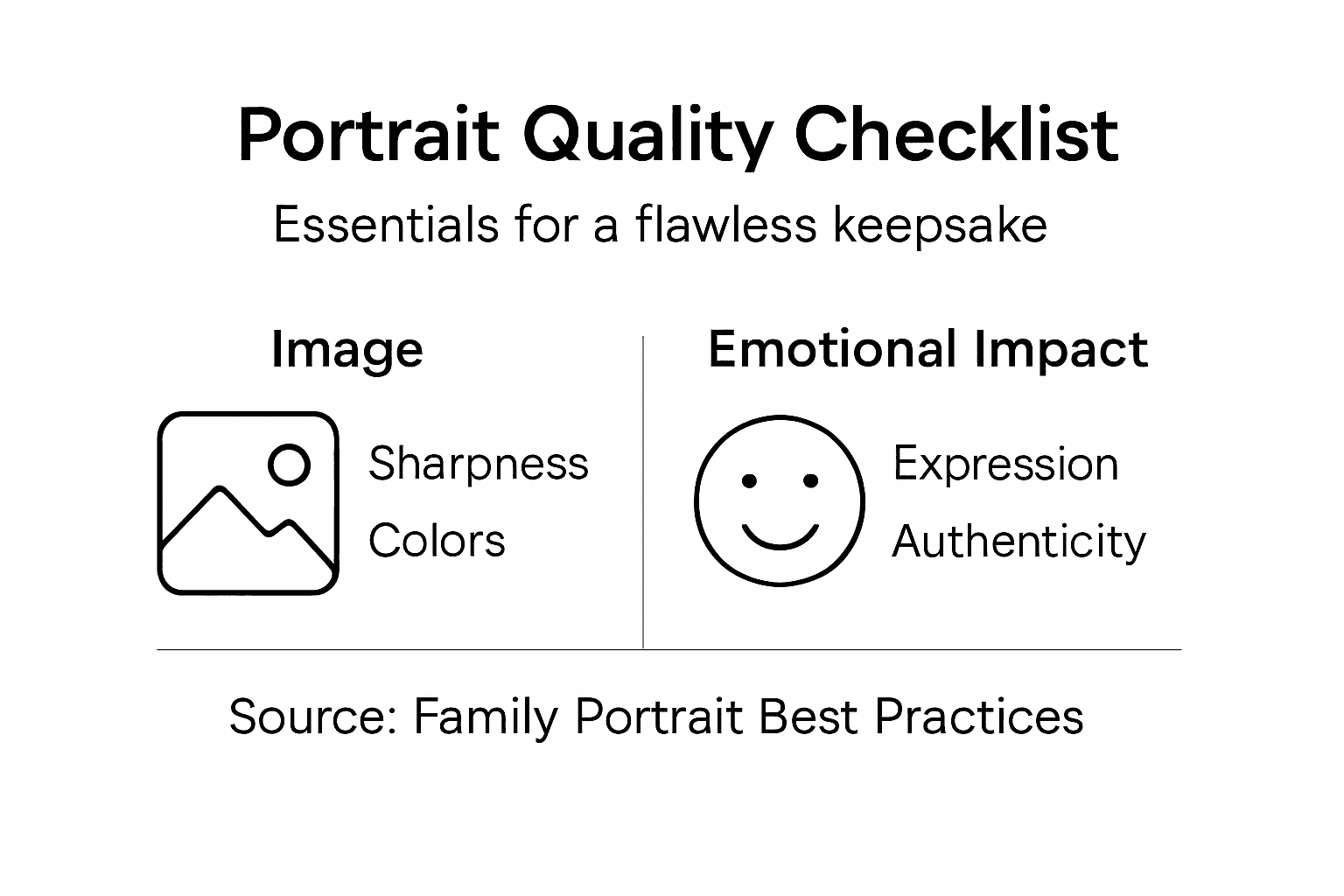
Portrait quality assessment techniques involve examining multiple critical aspects of the artwork. Consider these essential verification criteria:
- Check overall image sharpness and clarity
- Verify accurate colour representation
- Examine emotional depth and character portrayal
- Assess technical execution and artistic integrity
- Confirm precise details and facial nuances
Professional portrait artists employ sophisticated techniques to validate the final artwork. This involves scrutinising brushwork, colour balance, compositional harmony, and the subtle emotional resonance that transforms a mere image into a meaningful representation. Careful examination ensures that every element contributes to telling your subject’s unique story.
True artistic excellence lies in the delicate balance between technical precision and emotional authenticity.
Top tip: Request a digital proof or preliminary sketch before final production to catch any potential refinements early in the creative process.
Step 5: Display and preserve your custom keepsake
Creating a stunning portrait is only the beginning - protecting your cherished artwork ensures it becomes a lasting family treasure that can be enjoyed for generations. Your carefully crafted keepsake deserves thoughtful preservation and display.
Portrait preservation strategies reveal critical techniques for maintaining the integrity of your artwork. Consider these essential guidelines for safeguarding your precious portrait:
- Choose archival-quality framing materials
- Avoid direct sunlight and high-humidity areas
- Use UV-protective glass for framed portraits
- Maintain consistent room temperature
- Handle artwork with clean, white cotton gloves
Museum-grade conservation practices recommend specific environmental conditions to prevent degradation. Professional archivists suggest maintaining a stable environment between 18-22 degrees Celsius with relative humidity around 50%. Rotating the portrait’s display location periodically can also prevent uneven light exposure and potential colour fading.
Use this quick reference for portrait preservation best practices:
| Preservation Aspect | Recommended Action | Outcome |
|---|---|---|
| Framing materials | Use archival-quality, acid-free | Prevents material degradation |
| Light exposure | Avoid direct sunlight | Maintains colours over time |
| Humidity control | Keep around 50% relative humidity | Reduces risk of warping |
| Handling | Wear clean, cotton gloves | Minimises damage by oils |
A well-preserved portrait is a timeless bridge connecting past, present, and future generations.
Top tip: Consider creating digital backups of your portrait as an additional preservation strategy, ensuring your family’s memories remain intact.
Preserve Your Cherished Memories with Custom Portraits
Crafting a lasting pet or family portrait requires more than just a good photo. You want to capture the true essence and personality of your loved ones using the right composition, lighting, and colour choices explained in this article. However, achieving that perfect balance can be challenging when you do it yourself. Key pain points include finding high-resolution photos that highlight genuine expressions and ensuring your final keepsake reflects emotional depth and technical precision.
At The Family Portrait Companys, we understand these challenges and specialise in transforming your favourite photos into timeless custom portraits that celebrate your unique family or pet. Our expert artists focus on every detail from photo selection advice to final quality checks, so you get a flawless result that preserves those irreplaceable memories.

Ready to turn your photos into stunning personalised portraits? Visit our main site today to explore how we bring your vision to life with care and craftsmanship. Act now to safeguard your family’s legacy with a custom keepsake that will be treasured for generations.
Frequently Asked Questions
How can I choose the best photos for creating a pet or family portrait?
To create a stunning portrait, select high-quality photos that showcase your subject’s unique characteristics. Focus on images with good natural lighting, clear facial details, and genuine expressions, filling at least 50% of the frame.
What composition techniques should I use for an engaging portrait?
Aim for a composition that highlights your subject’s most engaging features and maintains visual balance. Use techniques like asymmetrical compositions and leading lines to guide the viewer’s gaze, ensuring the subject’s eyes are the focal point.
How can I adjust colours to reflect the personality of my subject in a portrait?
Select colours that resonate with your subject’s character to enhance emotional depth. You can highlight unique features and expressions by choosing colour palettes that either warm up or cool down the overall tone of the portrait.
What are the key aspects to verify the quality of a finished portrait?
Check for overall image sharpness, accurate colour representation, and emotional depth in the portrayal. Conduct a thorough review of details and technical execution to ensure each element contributes meaningfully to the artwork.
How can I preserve my portrait to ensure it lasts for generations?
Use archival-quality framing materials and avoid direct sunlight to protect your portrait. Maintain a consistent room temperature and humidity around 50%, and handle the artwork carefully to prevent damage.
What simple steps can I take to enhance the display of my portrait?
Consider placing your portrait in a location with soft, diffused light to prevent fading. Regularly rotate its display location to minimise uneven light exposure, which can help preserve the colours and details over time.
Recommended
- Pet Portrait Timeline Steps for Perfect Family Keepsakes – The Family Portrait Companys
- 7 Essential Tips for a Memorable Custom Portrait Gift Guide – The Family Portrait Companys
- 7 Unique Pet Portrait Ideas Every Family Should Try – The Family Portrait Companys
- Pet Portraits for Gifting: Complete Expert Guide – The Family Portrait Companys
- Cum se aleg tablourile personalizate? – LuxCanva® - Magazin tablouri canvas si tablouri personalizate