
Portrait Styles Explained: Choosing Lasting Pet Art
Bold choices in portrait style can transform a simple image of your pet into an enduring tribute with emotional depth. For many British families, custom pet portraits offer more than aesthetic value—they provide a personal way to commemorate companionship. By learning the distinct qualities of popular portrait styles and understanding what each one communicates, pet owners can select artwork that genuinely reflects both their pet’s spirit and the bond they share. Discover how artistic techniques elevate your pet’s memory beyond traditional keepsakes.
Table of Contents
- What Defines Portrait Styles And Their Purpose
- Popular Portrait Styles For Pets And People
- Matching Style With Pet Personality And Decor
- Portrait Commission Process: Steps And Choices
- Artist Collaboration For Emotional Accuracy
- Mistakes To Avoid With Custom Portraits
Key Takeaways
| Point | Details |
|---|---|
| Understanding Portrait Styles | Portrait styles convey individual identity and emotion, allowing deeper narratives about the subject to emerge beyond mere visual representation. |
| Selecting the Right Style | Choose a portrait style that resonates with both your pet’s personality and your home decor to create an intimate visual connection. |
| Commissioning Process | Collaborate closely with the artist, ensuring clear communication about your expectations and preferences to achieve an authentic representation. |
| Avoiding Common Mistakes | Provide quality reference photographs and allow artists creative freedom to ensure emotionally resonant and accurate portraits. |
What Defines Portrait Styles and Their Purpose
Portraiture represents a profound artistic practice of capturing human essence through visual representation. At its core, portraiture transcends mere physical likeness, serving as a sophisticated method of communicating identity, emotion, and social context. Historical portraiture explores complex layers of human experience beyond simple visual documentation.
Portrait styles emerge from intricate interactions between artistic technique, cultural context, and individual expression. Different approaches range from hyper-realistic renderings that capture minute facial details to abstract interpretations that convey emotional landscapes. Portrait styles communicate personality and social standing through carefully chosen artistic techniques, revealing deeper narratives about the subject.
The purpose of portrait styles extends far beyond aesthetic pleasure. They function as historical records, emotional archives, and powerful communication tools. Artists strategically select styles to emphasise specific aspects of an individual’s character - whether highlighting vulnerability through soft watercolour techniques or presenting strength via bold, graphic representations. Each style becomes a nuanced language of visual storytelling, allowing viewers to connect intimately with the subject’s inner world.
Pro tip: When selecting a portrait style, consider the emotional resonance you wish to capture rather than focusing solely on technical accuracy.
Popular Portrait Styles for Pets and People
Portrait art offers a remarkable diversity of styles, each bringing unique characteristics to capturing both human and animal subjects. Pet portrait styles range widely, encompassing everything from traditional realistic renderings to modern interpretative approaches that celebrate individual personality.
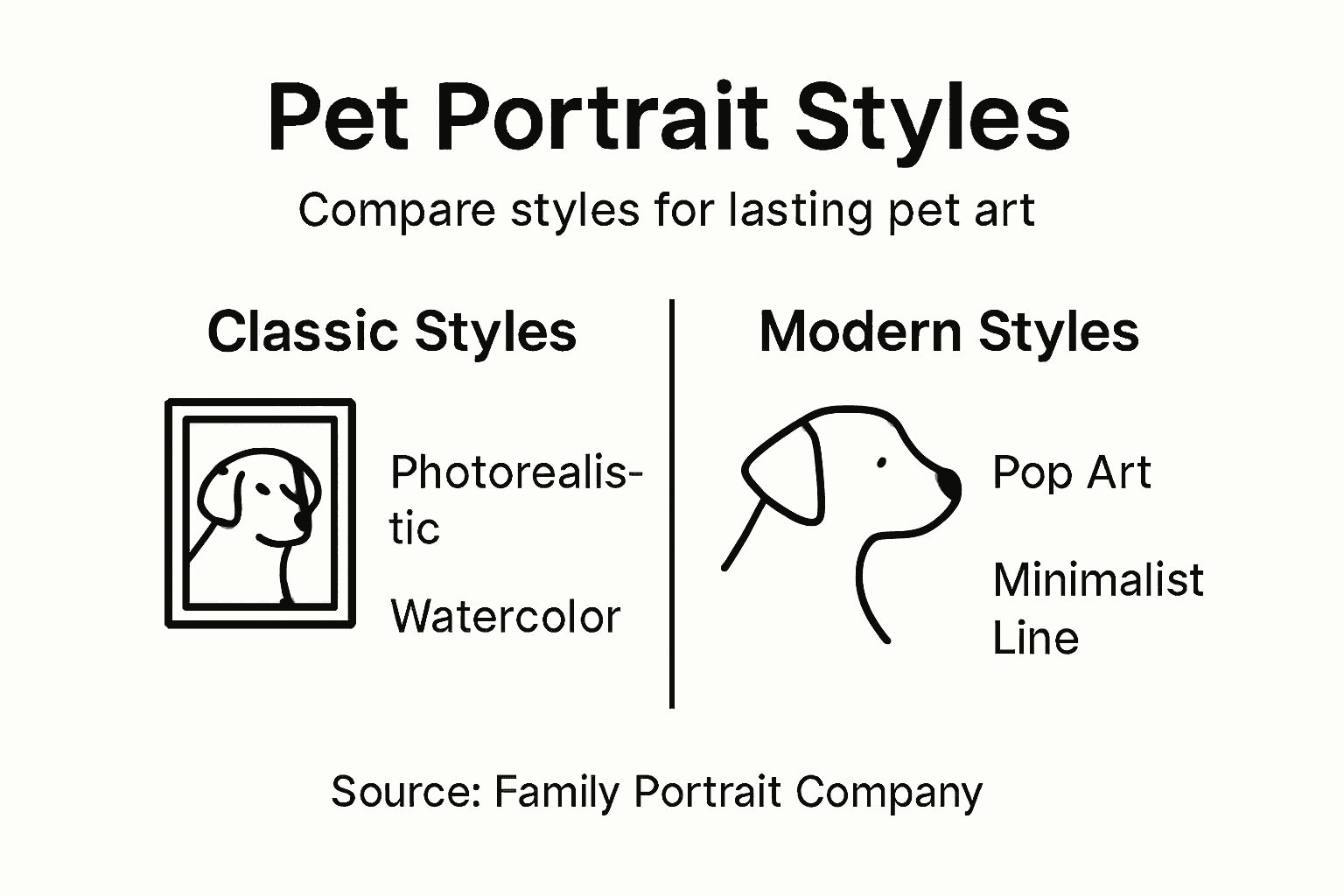
Classic portrait styles typically include Photorealistic Portraiture, which meticulously captures every fur detail and facial expression with precision. Watercolour styles offer a softer, more impressionistic approach, blending gentle colour washes to create ethereal representations that suggest emotion rather than exact replication. Digital art styles have emerged as a contemporary favourite, allowing artists to blend photographic accuracy with creative digital manipulation, producing vibrant and dynamic representations.
For pet owners seeking unique commemorations, more experimental styles like pop art portraits, minimalist line drawings, and vintage-inspired illustrations provide exciting alternatives to traditional approaches. Custom portrait techniques allow families to select styles that genuinely reflect their companion’s spirit and the emotional connection they share. These diverse approaches transform simple photographs into meaningful artistic narratives that transcend standard documentation.
Pro tip: Choose a portrait style that resonates with your emotional connection to the subject, not just aesthetic preferences.
Here is a comparison of common portrait styles and the qualities they best highlight for pets and people:
| Portrait Style | Main Feature Highlighted | Best For |
|---|---|---|
| Photorealistic | Detailed likeness and realism | Lifelike depictions |
| Watercolour | Soft emotional atmosphere | Sensitive or gentle pets |
| Digital Art | Modernity and vibrancy | Bold personalities |
| Pop Art | Playfulness and high energy | Energetic, exuberant pets |
| Minimalist Line Drawing | Simplicity of form and mood | Contemporary interiors |
| Vintage Illustration | Nostalgic or classic elegance | Traditional home settings |
Matching Style with Pet Personality and Decor
Selecting the perfect portrait style involves a delicate balance between capturing your pet’s unique personality and complementing your home’s aesthetic. Choosing a pet portrait style requires thoughtful consideration of both your furry companion’s character and your interior design preferences.
For energetic, playful pets like Jack Russell terriers or Border Collies, dynamic styles such as pop art or vibrant watercolours can beautifully reflect their spirited nature. Conversely, more serene animals like Persian cats or older dogs might be best represented through soft, muted oil paintings or delicate pencil sketches that capture their gentle essence. The artwork’s colour palette should harmonise with your existing room decor, creating a seamless visual integration that feels both personal and intentional.
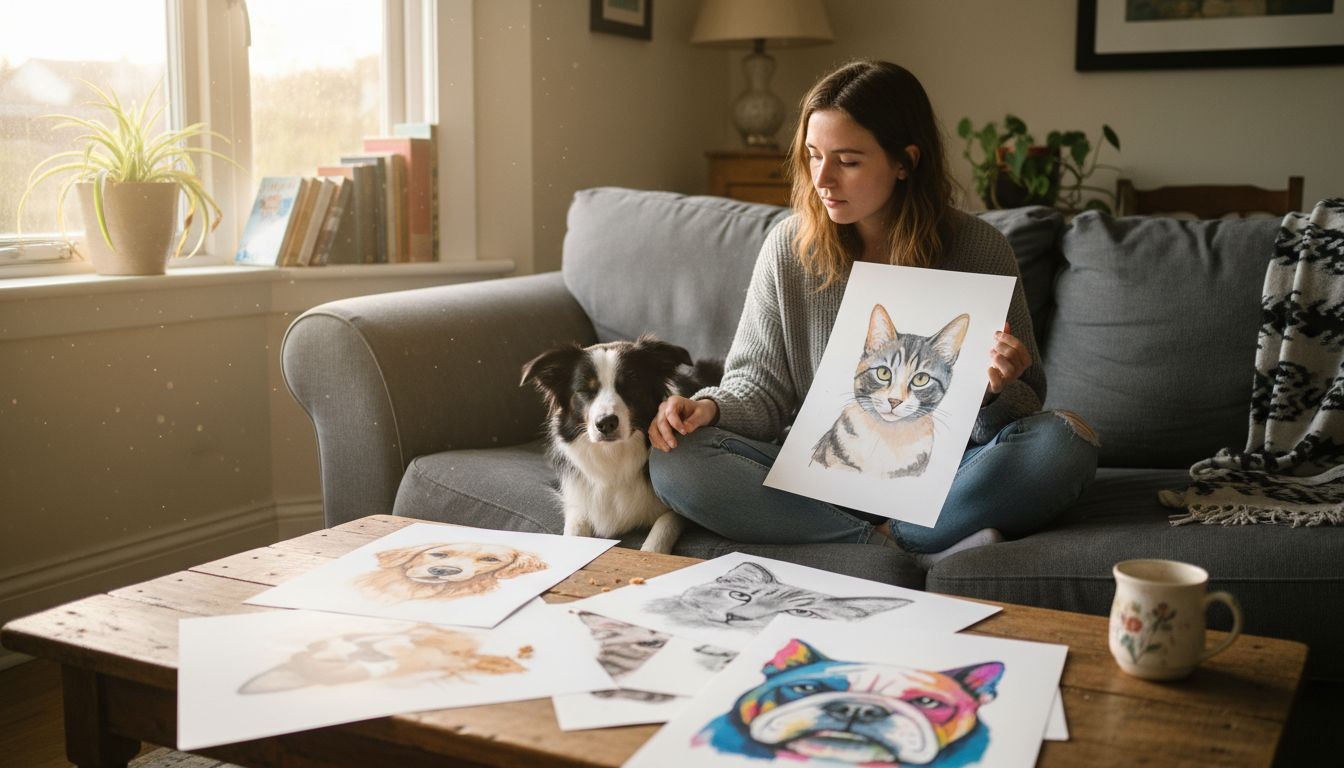
Beyond aesthetic considerations, the portrait style should serve as an emotional bridge between your pet’s personality and your living space. Contemporary minimalist interiors might benefit from clean, line-drawn portraits, while vintage-inspired spaces could embrace more traditional, detailed realistic renderings. Consider factors like your pet’s most memorable traits - a cheeky side glance, a contemplative moment, or an action-packed play session - and select a style that can authentically translate those nuanced characteristics into visual art.
Pro tip: Collect multiple photos of your pet in different moods and settings to help the artist capture their true essence.
Portrait Commission Process: Steps and Choices
Navigating the portrait commission journey requires careful planning and clear communication. Portrait commission steps involve strategic planning that transforms a creative vision into a lasting artistic memento. The process begins with developing a comprehensive brief that outlines your expectations, preferred artistic style, and specific requirements for capturing your pet’s unique essence.
Typically, the commission process unfolds through several critical stages. Initially, you’ll engage in an in-depth consultation with the artist to discuss your vision, selecting the most appropriate medium and style that reflects your pet’s personality. This preliminary discussion allows artists to understand your aesthetic preferences and technical requirements. Artists will then request reference photographs or potentially arrange a photoshoot to capture your pet’s most characteristic expressions and poses.
Subsequent stages involve collaborative refinement, where preliminary sketches or digital mock-ups are presented for your review and approval. This iterative process ensures the final artwork authentically represents your pet while meeting your artistic expectations. Budget discussions, timeline expectations, and detailed contract agreements are crucial components that protect both the artist’s creative work and your investment. Some artists offer multiple revision rounds, allowing you to provide feedback and fine-tune the portrait’s composition, colour palette, and overall emotional resonance.
Pro tip: Compile a diverse collection of your pet’s photographs showcasing different moods and angles to provide the artist with comprehensive visual reference material.
Artist Collaboration for Emotional Accuracy
Capturing the true essence of a beloved pet requires more than technical artistic skill - it demands profound emotional understanding. Building trust in artistic collaborations transforms a simple portrait into a deeply meaningful representation that resonates with genuine emotional depth.
Successful emotional portraiture emerges through an intricate dance of communication and empathy between the artist and the pet owner. Artists skilled in emotional accuracy employ nuanced techniques that go beyond mere physical representation. They seek to understand the unique personality, subtle behavioural quirks, and underlying spirit of the animal. This might involve multiple conversations, reviewing extensive photographic references, and creating a comfortable environment that allows the subject’s true character to shine through.
The technical mastery required for emotional accuracy involves sophisticated artistic choices in composition, lighting, and subtle gestural details. Experienced portrait artists recognise that each pet has a distinctive emotional landscape - a playful terrier’s boundless energy, a senior cat’s contemplative gaze, or a rescue dog’s mixture of vulnerability and resilience. By carefully selecting artistic techniques that highlight these unique emotional signatures, artists create portraits that feel alive, capturing not just how an animal looks, but how it truly feels.
Pro tip: Share personal stories and detailed observations about your pet’s personality during the initial consultation to help the artist capture their emotional essence.
Mistakes to Avoid with Custom Portraits
Custom pet portraits represent significant emotional and financial investments, making it crucial to navigate the process with care and informed decision-making. Portrait photography mistakes can dramatically impact the final artwork’s quality and emotional resonance, potentially undermining the entire commemorative experience.
One of the most common errors is providing low-quality reference photographs that fail to capture your pet’s true essence. Blurry, poorly lit, or unflattering images limit the artist’s ability to create an authentic representation. Similarly, being overly prescriptive about artistic style can constrain the artist’s creative interpretation. While guidance is important, micromanaging the creative process often results in a portrait that feels stiff and lacks the nuanced emotional depth that makes custom artwork truly special.
Another critical mistake is rushing the collaborative process or selecting an artist whose style does not align with your vision. Each artist brings a unique perspective and technical approach, and not every talented professional will be the right fit for your specific requirements. Thorough research, reviewing comprehensive portfolios, and having transparent conversations about expectations are essential steps in avoiding potential disappointment. Budget considerations should never compromise the artwork’s quality - investing in a skilled artist who understands your emotional objectives is far more valuable than seeking the cheapest option.
Below is a summary of mistakes to avoid and the positive alternatives during the custom portrait process:
| Mistake to Avoid | Better Approach | Benefit Achieved |
|---|---|---|
| Poor quality reference photos | Supply clear, well-lit images | Accurate and expressive portrait |
| Rushing the process | Allow ample creation time | Superior artistic outcome |
| Over-prescribing style | Encourage artist’s creative input | Greater emotional authenticity |
| Neglecting portfolio review | Research artist’s previous work | Style suitability and satisfaction |
Pro tip: Request multiple preliminary sketches and maintain open, constructive communication with your chosen artist throughout the portrait creation process.
Discover Your Perfect Pet Portrait Style Today
Choosing the right portrait style can be overwhelming, especially when you want to capture your pet’s true personality and emotional essence. Many pet owners struggle with finding a style that balances sentimental value with artistic expression while matching their home decor. At The Family Portrait Company, we understand these challenges and offer tailored custom pet portraits that bring your cherished companion’s unique character to life.
Explore our Home page – The Family Portrait Company to browse a variety of portrait styles—from photorealistic to minimalist line drawings—that match your pet’s personality and your aesthetic vision. Ready to turn your favourite photos into lasting artwork? Visit https://familyportraitcompany.com now to start your commission and collaborate with skilled artists who specialise in emotional accuracy and personalised creativity.
Frequently Asked Questions
What are the different styles of portraiture I can choose for my pet?
Portrait styles for pets range from photorealistic portraiture, which captures every detail, to softer watercolour paintings and modern digital art. Unique styles like pop art and minimalist line drawings also celebrate your pet’s personality.
How can I select the right portrait style to reflect my pet’s personality?
Consider your pet’s character and behaviour. Energetic pets might suit vibrant styles like pop art, while serene animals may be better represented in soft oil paintings or delicate sketches. The artwork should also align with your home decor for a cohesive look.
What steps are involved in commissioning a custom pet portrait?
The process typically involves an initial consultation with the artist to discuss your vision, followed by providing reference photos of your pet. You’ll review sketches and provide feedback before finalising the portrait, ensuring it authentically represents your pet’s essence.
What should I avoid when commissioning a custom pet portrait?
Avoid supplying poor-quality reference photos, rushing the process, or being overly prescriptive about the artistic style. It’s important to conduct thorough research on the artist and to allow them creative freedom to capture your pet’s emotional authenticity.
Recommended
- How to Choose Pet Portrait Style for Custom Artwork – The Family Portrait Companys
- Understanding Pet Portrait Styles Explained for Pet Owners – The Family Portrait Companys
- 7 Top Pet Portrait Styles Every Family Should Know – The Family Portrait Companys
- Complete Guide to Selecting Artist for Pet Portraits – The Family Portrait Companys
- How to Interpret Arts and Crafts Motifs with Confidence -