
Role of Artist in Portrait Creation – Why It Matters
Nearly half of all British households share their lives with a pet, yet few ever capture that cherished bond in a truly meaningful way. For those who see their animals as family, custom portraits offer far more than just a lovely picture. These works of art become a celebration of personality and memory that only a skilled artist can reveal. Discover how the creative process transforms your companion’s unique spirit into a lasting tribute.
Table of Contents
- Defining The Role Of The Artist In Portrait Creation
- Types Of Portraits And Artistic Variations
- How Artists Capture Pet Identity And Personality
- Collaborating With Owners For Personalised Portraits
- Common Challenges And Mistakes In Pet Portraiture
Key Takeaways
| Point | Details |
|---|---|
| The Artist’s Role | Artists go beyond mere likeness in portraiture, decoding emotions and character to create a narrative visualisation of identity. |
| Types of Portraits | Portrait styles vary widely, from traditional to conceptual, each reflecting the intricate dynamics of social and cultural contexts. |
| Collaborative Process | Engaging pet owners enhances the portrait’s emotional resonance, allowing for a more personalised representation of their beloved pets. |
| Challenges in Portraiture | Artists face unique challenges, including unpredictable animal behaviour and balancing owner expectations with artistic goals. |
Defining the Role of the Artist in Portrait Creation
A portrait represents far more than a mere visual reproduction of an individual. Artists engaged in portrait creation serve as profound interpreters of human essence, transforming photographic reference into a nuanced narrative that captures personality, emotional depth, and personal history. The complex artistic process explores how visual representation transcends simple likeness.
In portrait artistry, the creative professional functions as both observer and storyteller. They decode subtle gestural language, emotional undertones, and intrinsic character traits that conventional photography cannot capture. Artists negotiate a delicate tension between accurate representation and meaningful interpretation, translating an individual’s inner landscape into visual form. This interpretative process involves careful composition, strategic use of colour, texture, and symbolic elements that reveal more than physical appearance.
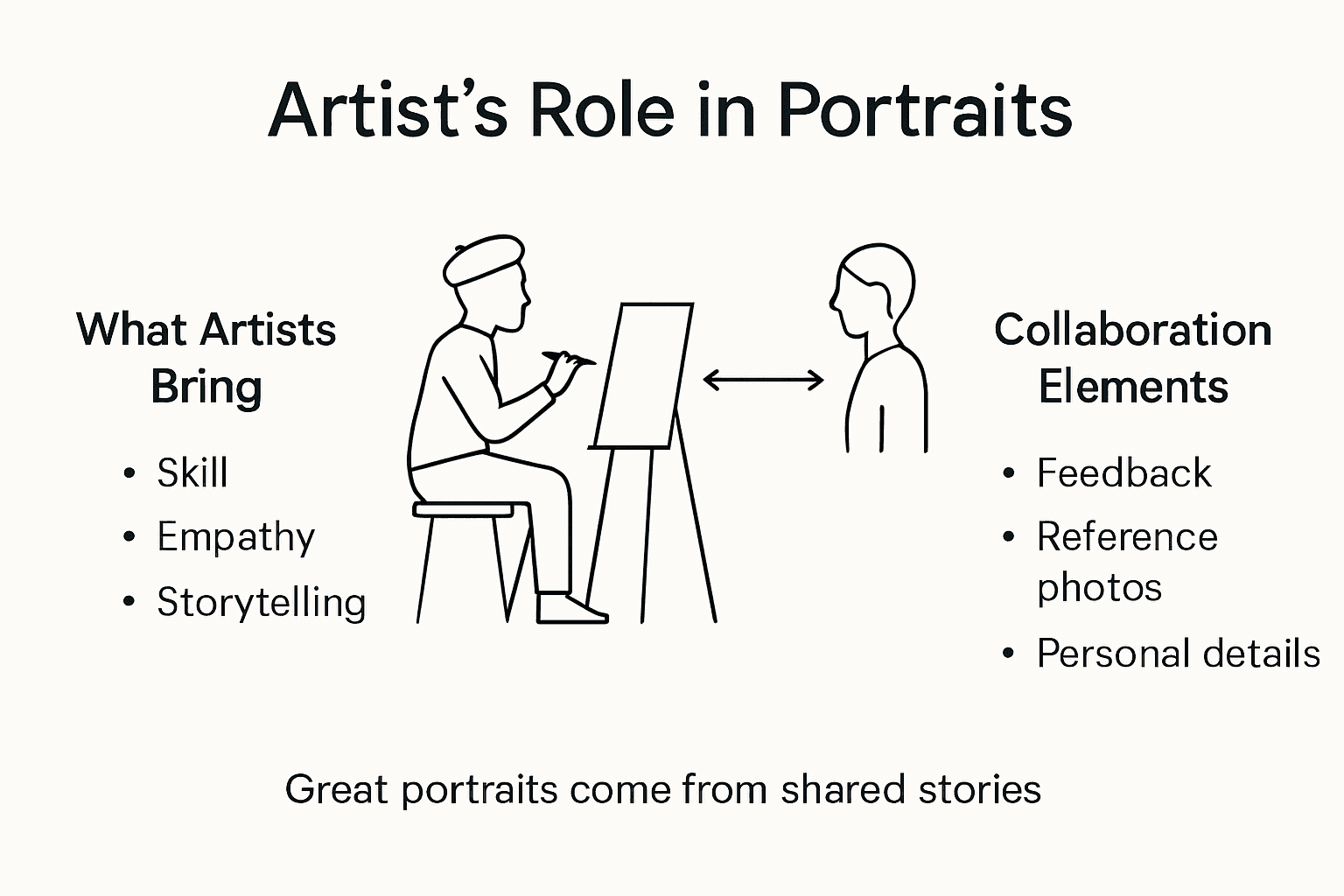
Understanding the artist’s role means recognising portraiture as a collaborative dialogue between subject and creator. The portrait becomes a negotiated space where personal narrative, artistic vision, and cultural context intersect. Professional portrait artists do not merely replicate features but construct a comprehensive visual language that communicates identity, emotions, and unspoken stories.
Pro tip: When commissioning a portrait, discuss your personal narrative and emotional connection with the artist to help them capture your essence more authentically.
Types of Portraits and Artistic Variations
Portrait artistry encompasses a rich and diverse range of styles, each offering unique approaches to representing human identity and experience. From traditional formal representations to contemporary conceptual interpretations, portrait types reflect complex social and cultural dynamics. These variations demonstrate how artists manipulate visual language to communicate profound narratives beyond mere physical resemblance.
Historical Portrait Categories include several distinctive styles:
- Formal Portraits: Traditionally commissioned by nobility, emphasising social status and professional achievements
- Self-Portraits: Intimate explorations of personal identity and artistic introspection
- Psychological Portraits: Focusing on emotional and inner landscapes rather than physical appearance
- Conceptual Portraits: Challenging conventional representation through experimental techniques
Different portrait styles emerge from specific historical periods and cultural contexts, revealing how artistic representation evolves alongside societal transformations. Contemporary portrait artists often blend multiple approaches, creating hybrid forms that challenge traditional boundaries between documentary representation and imaginative interpretation.
Modern portrait creation transcends simple visual documentation, becoming a sophisticated dialogue between subject, artist, and viewer. Artists strategically employ techniques like symbolic composition, unconventional colour palettes, and abstract elements to communicate deeper psychological and emotional narratives.
Pro tip: When selecting a portrait style, consider how different artistic approaches might best capture the unique essence of your subject’s personality and story.
Here is a summary comparing key historical and modern portrait styles and their core aims:
| Portrait Style | Main Purpose | Typical Features | Example Outcome |
|---|---|---|---|
| Formal Portrait | Display social status | Detailed attire, setting | Regal, dignified impression |
| Self-Portrait | Explore self-identity | Expressive, introspective | Reveals artist’s personality |
| Psychological Portrait | Convey emotional state | Unusual poses, symbolism | Focus on inner psychology |
| Conceptual Portrait | Challenge tradition, provoke thought | Experimental techniques | Abstract or ambiguous impact |
How Artists Capture Pet Identity and Personality
Capturing the unique essence of a pet requires more than technical artistic skill. Artists must develop a profound understanding of animal psychology, interpreting non-verbal communication and nuanced behavioural patterns that reveal an animal’s distinctive personality. This approach transforms pet portraiture from simple visual reproduction into a deeply emotional and meaningful representation.
Key strategies for capturing pet identity include:
- Observational Depth: Spending time understanding the pet’s unique mannerisms
- Behavioural Interpretation: Analysing subtle gestural and postural signals
- Emotional Resonance: Translating personality traits into visual language
- Dynamic Composition: Selecting poses that reflect the pet’s natural character
Scientific research on animal personality provides crucial insights for artists seeking to create authentic representations. Each pet possesses individual traits that manifest through specific behaviours, expressions, and interaction patterns. Skilled artists learn to decode these signals, incorporating them into portraits that communicate more than physical appearance.
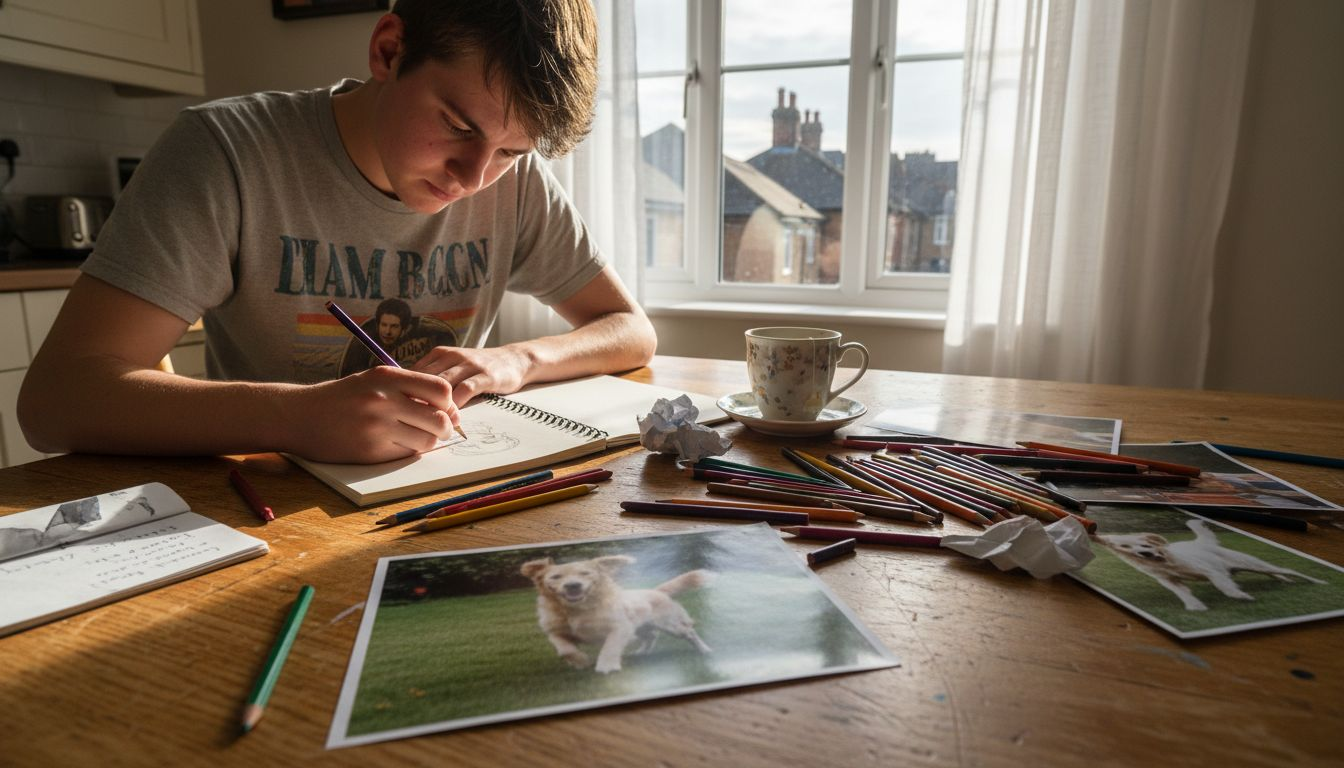
The most compelling pet portraits emerge from a collaborative process between artist and pet owner. By gathering detailed stories, understanding the animal’s background, and observing their unique characteristics, artists can create portraits that capture not just a visual likeness, but the genuine spirit and personality of the beloved companion.
Pro tip: Collect multiple reference photographs showing your pet in different moods and settings to help the artist capture their truest essence.
Collaborating with Owners for Personalised Portraits
Collaborative art creation represents a profound dialogue between artist and pet owner, transforming portrait creation into an intimate, emotionally resonant experience. This partnership goes beyond traditional artistic practice, requiring deep empathy, active listening, and a genuine commitment to understanding the unique relationship between pet and owner.
Key collaboration strategies include:
- Detailed Consultation: Conducting in-depth discussions about the pet’s personality
- Emotional Narrative Gathering: Exploring meaningful stories and characteristics
- Reference Material Exchange: Sharing photographs and behavioural insights
- Iterative Feedback Process: Maintaining open communication throughout creation
Understanding the nuanced dynamics of pet ownership in the UK helps artists create more meaningful portraits. Each collaborative interaction becomes an opportunity to translate emotional connections into visual storytelling, ensuring the final artwork captures not just physical likeness, but the genuine spirit of the animal.
Successful personalised portraits emerge from a delicate balance of artistic skill and emotional intelligence. Artists must create a safe, supportive environment where owners feel comfortable sharing intimate details about their beloved companions, allowing the artwork to become a true reflection of their shared bond.
Pro tip: Prepare a comprehensive list of your pet’s unique traits, favourite activities, and memorable moments to provide the artist with rich emotional context.
The following table outlines artist-owner collaboration versus artist-only creation in pet portraiture:
| Aspect | Collaborative Process | Artist-Only Process |
|---|---|---|
| Emotional Insight | Deepened through owner stories | Limited to observation |
| Artistic Direction | Shaped by mutual discussion | Driven solely by artist’s vision |
| Final Likeness | Personalised, emotionally rich | Accurate but less personalised |
| Owner Satisfaction | Higher due to involvement | May miss personal nuances |
Common Challenges and Mistakes in Pet Portraiture
Pet portrait creation involves complex psychological and technical challenges that extend beyond simple artistic representation. Artists must navigate unpredictable animal behaviours, emotional nuances, and the delicate process of capturing an animal’s true essence while managing owner expectations and technical limitations.
Common challenges in pet portraiture include:
- Behavioural Unpredictability: Managing pets’ limited attention spans
- Emotional Complexity: Capturing authentic personality beyond physical likeness
- Technical Limitations: Working with varied reference materials
- Communication Barriers: Understanding subtle interaction signals
Pet ownership challenges significantly impact the portrait creation process, influencing artistic outcomes and client satisfaction. Financial constraints, pet health considerations, and psychological stresses can create additional layers of complexity that artists must sensitively navigate.
Successful pet portraiture demands extraordinary patience, adaptability, and emotional intelligence. Artists must develop strategies for managing unexpected animal behaviours, interpreting subtle emotional cues, and creating a comfortable environment that allows the pet’s genuine personality to emerge during the creative process.
Pro tip: Request multiple reference photographs taken in different settings and moods to provide a comprehensive understanding of your pet’s true character.
Discover How Skilled Artists Capture True Essence in Portraits
The article highlights the vital role artists play in transforming simple images into deeply personal narratives that reflect true identity and emotion. If you want your cherished memories or your pet’s unique personality to be immortalised with this expert touch, understanding the challenges such as behavioural unpredictability and emotional complexity is key. At The Family Portrait Company, we specialise in custom pet and human portraits that go beyond likeness to express genuine character and connection.
Bring your story to life by choosing a personalised portrait style that matches your vision. Visit our Home page – The Family Portrait Companys to explore our gallery and learn how our artists collaborate closely with you to create emotionally rich artworks. Don’t settle for just an image act now and secure a portrait that truly celebrates your loved ones. Start your journey today on https://familyportraitcompany.com.
Frequently Asked Questions
What is the role of an artist in portrait creation?
An artist in portrait creation serves as both an observer and storyteller, translating a subject’s personality and emotions into visual form, going beyond mere physical likeness.
How do artists capture a pet’s personality in portraits?
Artists capture a pet’s personality through observational depth, understanding behaviour, emotional resonance, and dynamic composition, which transforms the portrait into a meaningful representation of the pet’s essence.
What types of portraits are available and how do they differ?
Types of portraits include formal, self-portraits, psychological, and conceptual. Each type serves distinct purposes, such as emphasising social status, exploring identity, conveying emotions, or challenging traditional representation.
How can I collaborate effectively with an artist for a personalised portrait?
Effective collaboration involves detailed consultations, sharing emotional narratives and reference material, and maintaining open communication throughout the creative process to ensure the portrait reflects a genuine connection with the subject.
Recommended
- Role of Artists in Custom Portraits: Complete Guide – The Family Portrait Companys
- Fine Art Portraits: Everything You Need to Know – The Family Portrait Companys
- Portrait Creation Process: Everything You Need to Know – The Family Portrait Companys
- Role of Photography in Portraits: Capturing True Character – The Family Portrait Companys