
What Makes Portrait Art Valuable: Emotional Impact and Artistry
For many pet owners, finding the right way to honour a beloved animal goes far beyond simple displays or keepsakes. The value of portrait art is rooted in how it connects personal memories with cultural significance and emotional resonance, as explored by The National Portrait Gallery in London. Commissioning a portrait is not just about technical skill but about capturing the spirit and story that make your companion special, turning cherished relationships into meaningful art that stands the test of time.
Table of Contents
- Defining Value In Portrait Art Today
- Types Of Portrait Art And Their Distinctions
- Emotional Significance And Personal Connection
- Artist Reputation, Materials, And Craftsmanship
- Market Factors And Common Pricing Mistakes
Key Takeaways
| Point | Details |
|---|---|
| Value in Portrait Art | The value of portrait art today is derived from connection, emotional resonance, and cultural significance rather than just technique. |
| Emotional Connection | Commissioned portraits serve as lasting memories, conveying personal relationships and deep emotional significance for pet owners. |
| Artist Selection | Choosing an artist whose style aligns with your vision is crucial; their ability to capture your pet’s personality directly impacts the portrait’s value. |
| Market Awareness | Understanding market dynamics and pricing factors can prevent overpaying for mediocre work and help identify genuine artistic value. |
Defining Value in Portrait Art Today
Portrait art’s value has shifted dramatically over the past decade. It’s no longer measured solely by technique or subject matter—it’s about connection, meaning, and cultural relevance.
The National Portrait Gallery in London defines modern portrait value as rooted in how artwork reflects contemporary culture and tells individual stories. Portraiture’s cultural and artistic value encompasses historical significance, identity representation, and the technical mastery behind each piece.
Today’s portrait value comes from multiple interconnected sources:
- Emotional resonance: Does the portrait capture something authentic about the subject?
- Artistic skill: Technical excellence combined with personal style and interpretation.
- Cultural significance: How the portrait reflects broader narratives about identity and society.
- Preservation of memory: Portraits act as tangible connections to people and moments in time.
The Shift from Commercial to Personal Value
Historically, portraits were status symbols—expensive commissions reserved for the wealthy. Now, value centres on personal meaning. A custom portrait of your pet holds profound worth because it captures a cherished relationship you’ll treasure for life.
This democratisation of portraiture has transformed who commissions art and why. Pet owners in the UK increasingly seek custom portraits not for prestige, but for genuine emotional connection and preservation.
Measuring Value Beyond Price
When you commission a custom portrait that reflects artistic excellence, you’re investing in something with layered value:
- Emotional value: The portrait becomes a daily reminder of your bond with your pet.
- Artistic value: A skilled artist transforms a photograph into a unique, interpretive work.
- Longevity value: Unlike digital files, a quality portrait endures for generations.
- Personal narrative value: Your pet’s portrait tells your story.
Contemporary portraiture’s worth lies in how authentically it captures identity and meaning—not in commercial market trends.
Pet owners often underestimate portrait value because they compare it to mass-produced alternatives. But a commissioned portrait from an artist who understands your pet’s personality carries value that generic prints simply cannot.
The difference is palpable. Your pet’s portrait becomes a family heirloom rather than wall decoration.
Pro tip: When commissioning a portrait, prioritise an artist whose previous work resonates emotionally with you—their ability to infuse personality and authenticity directly determines the portrait’s lasting value to your home and heart.
Types of Portrait Art and Their Distinctions
Portrait art isn’t a single category—it’s a spectrum of approaches, each with distinct techniques, purposes, and emotional impact. Understanding these differences helps you choose the right style for your pet’s commission.
The diversity of portrait forms ranges significantly. Traditional painting, drawing, and sculpture each offer different visual languages, whilst photography and digital media have expanded what portraiture can be.
Medium and Technique
Each portrait medium communicates differently. Oil painting creates rich, textured work with depth and luminosity. Watercolour produces softer, more ethereal pieces. Pencil drawing offers intimacy through simplicity. Digital art allows experimentation without the constraints of traditional media.
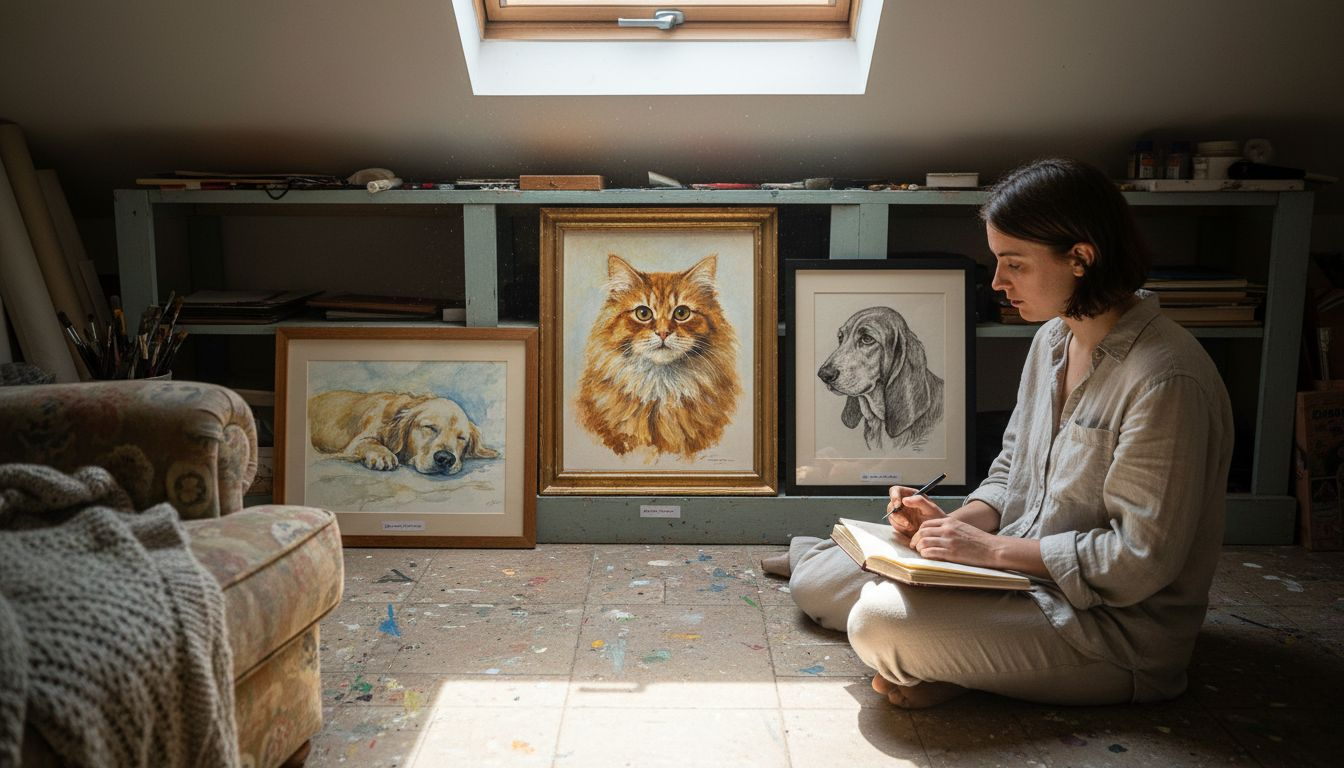
For pet owners, medium choice affects both the final aesthetic and the portrait’s longevity. A watercolour of your spaniel has different visual warmth than a charcoal study.
Key portrait mediums include:
- Painted portraits: Oil, acrylic, watercolour—each with distinct colour richness and texture
- Drawings: Pencil, charcoal, pastel—offering precision and emotional subtlety
- Photographic portraits: Capturing candid moments or formal compositions
- Digital portraits: Modern interpretations with unlimited stylistic possibilities
- Sculptural portraits: Three-dimensional likenesses in clay, bronze, or stone
Style Variations and Emotional Expression
Style fundamentally shapes how a portrait feels. Hyper-realistic work captures minute detail—perfect for those wanting absolute likeness. Impressionistic styles prioritise feeling over accuracy, capturing your pet’s essence rather than exact features. Abstract or conceptual portraits push boundaries entirely.
Your dog’s portrait in a hyper-realistic style conveys different meaning than the same subject in loose, impressionistic brushstrokes. One emphasises accuracy; the other emphasises spirit.
Different portrait styles communicate entirely different emotional messages—choosing your style is choosing how your pet’s story gets told.
Formal Versus Informal Approaches
Formal portraits and candid compositions serve different purposes. Formal portraits position subjects deliberately, creating composed, intentional work. Informal portraits capture unguarded moments—your cat mid-stretch, your rabbit at play.
Commissioned versus candid distinctions matter too. A commissioned formal portrait becomes heirloom artwork. Candid captures preserve spontaneous personality and movement.
Consider what resonates with you:
To better understand how different portrait styles influence the final artwork, consider the distinctions below:
| Style Type | Visual Impact | Emotional Tone |
|---|---|---|
| Hyper-realistic | Precise, highly detailed | Emphasises authenticity |
| Impressionistic | Loose, expressive | Captures energy and mood |
| Abstract/Conceptual | Non-literal, stylised | Focus on feeling or theme |
| Traditional Formal | Composed, classic | Timeless and elegant |
- Formal portrait: Composed, intentional positioning; timeless aesthetic
- Informal portrait: Candid moment; captures personality and movement
- Mixed approach: Combines formal structure with informal spontaneity
Contemporary Expansions
Modern portraiture includes mixed media and digital forms that previous generations never imagined. Artists combine traditional techniques with contemporary elements, creating hybrid works that feel both classical and current.
Your custom pet portrait might blend traditional oil painting with digital enhancement, or combine drawing with photographic elements. These contemporary approaches often feel fresher than strictly traditional methods.
The breadth of portrait approaches means there’s genuinely a style matching your vision and connection to your pet.
Pro tip: When selecting a portrait style, review your artist’s portfolio across multiple mediums and styles—this reveals their versatility and helps you identify which approach genuinely resonates with how you envision your pet’s presence in your home.
Emotional Significance and Personal Connection
A portrait’s true value lives in the emotional bond it creates. This isn’t about aesthetics alone—it’s about how a piece makes you feel when you look at it every morning.
When you see your pet’s portrait on the wall, something happens internally. You’re transported back to moments you shared. You remember their specific mannerisms, their personality quirks, the unconditional companionship they offered.
The Power of Emotional Recognition
Portraits work because they bypass logic and speak directly to feeling. Portraits evoke empathy and foster connection between the depicted subject and viewers. Your cat’s portrait captures more than their physical features—it holds their spirit.
This emotional resonance is what transforms wall art into a cherished family possession. A generic print doesn’t carry this weight. A commissioned portrait does because an artist spent time understanding your pet’s unique character.
Key emotional responses portraits trigger:
- Recognition: Seeing your pet’s distinct personality reflected
- Comfort: Daily visual connection with a beloved companion
- Preservation: Knowing their essence is permanently captured
- Reflection: Prompting memories and deepening appreciation
- Pride: Displaying something deeply meaningful in your home
Personal Connection and Memory
Portraits serve as memory anchors. They’re not just decorative objects—they’re gateways to specific moments, feelings, and relationships. Every time you glance at your dog’s portrait, you’re briefly reunited with them.
This matters profoundly for pet owners. Unlike human family members, our pets’ time with us is finite and uncertain. A portrait becomes a form of permanence. It says: “This bond mattered. This love was real. This connection deserves to be remembered.”
The emotional significance deepens over time. Years later, that portrait becomes even more valuable because it preserves a version of your pet frozen in time—their exact personality, their particular way of being.
Emotional connection transforms portrait art from decoration into memoir—a visual testament to love and companionship.
Authenticity and Artistic Interpretation
Portraiture functions as an emotional experience where viewers interpret feelings expressed through both subject and artist’s vision. A skilled artist captures not just appearance but personality, mood, and essence.
This is why choosing an artist matters tremendously. An artist who understands your pet can translate their energy onto canvas. They see what makes your pet distinctly themselves—that particular tilt of the head, the warmth in their eyes, their characteristic pose.
Consider what emotional elements you want captured:
- Playfulness: Active pose, bright eyes, energetic composition
- Gentleness: Soft gaze, relaxed posture, calm background
- Loyalty: Direct eye contact, attentive expression, intimate framing
- Vitality: Movement, vibrant colours, dynamic positioning
Your pet’s portrait becomes a conversation starter, a family heirloom, a daily emotional touchstone. It transforms a photograph into something that speaks to your heart.
Pro tip: Share detailed stories about your pet’s personality with your artist—their quirks, favourite activities, defining moments—this context helps them infuse emotional authenticity that generic portraiture simply cannot achieve.
Artist Reputation, Materials, and Craftsmanship
Not all portraits hold equal value. The difference between a forgettable piece and a treasured heirloom often comes down to three interconnected factors: who created it, what they used, and how meticulously they worked.
Think of it like commissioning a handmade suit versus buying one off-the-rack. The tailoring matters. The fabric matters. The tailor’s reputation matters.
Why Artist Reputation Matters
Artist reputation directly influences portrait value, with accomplished artists commanding greater recognition and investment. A portrait by an established artist carries weight. It signals mastery, consistency, and a body of work that speaks for itself.
For pet owners, this means choosing an artist whose style and track record align with your vision. An artist known for capturing personality and emotional depth will deliver differently than someone focused purely on photorealistic accuracy.
What reputation signals:
- Experience: Years refining technique and understanding subject matter
- Consistency: Reliable quality across multiple commissions
- Recognition: Peer acknowledgement and client testimonials
- Artistic vision: A distinct, recognisable approach to portraiture
- Trust: Proven ability to deliver on promises
The Role of Materials in Longevity
Materials determine whether your portrait lasts decades or deteriorates within years. Premium paint, archival paper, quality canvas—these aren’t luxuries. They’re investments in permanence.
Cheap materials fade, crack, and yellow. Quality materials resist time. Your pet’s portrait should outlive you. This demands superior materials from the outset.
Consider the material hierarchy:
- Oil paints: Professional-grade pigments with centuries of proven longevity
- Canvas: Museum-quality, acid-free foundation
- Paper: Archival-rated for drawings and watercolours
- Varnish: Protective finish preventing oxidation and fading
Superior craftsmanship and premium materials elevate artwork status and ensure durability across generations.
Craftsmanship and Technical Mastery
Craftsmanship separates competent portraits from exceptional ones. Technical skill means understanding composition, colour theory, light and shadow, anatomical accuracy, and emotional expression simultaneously.
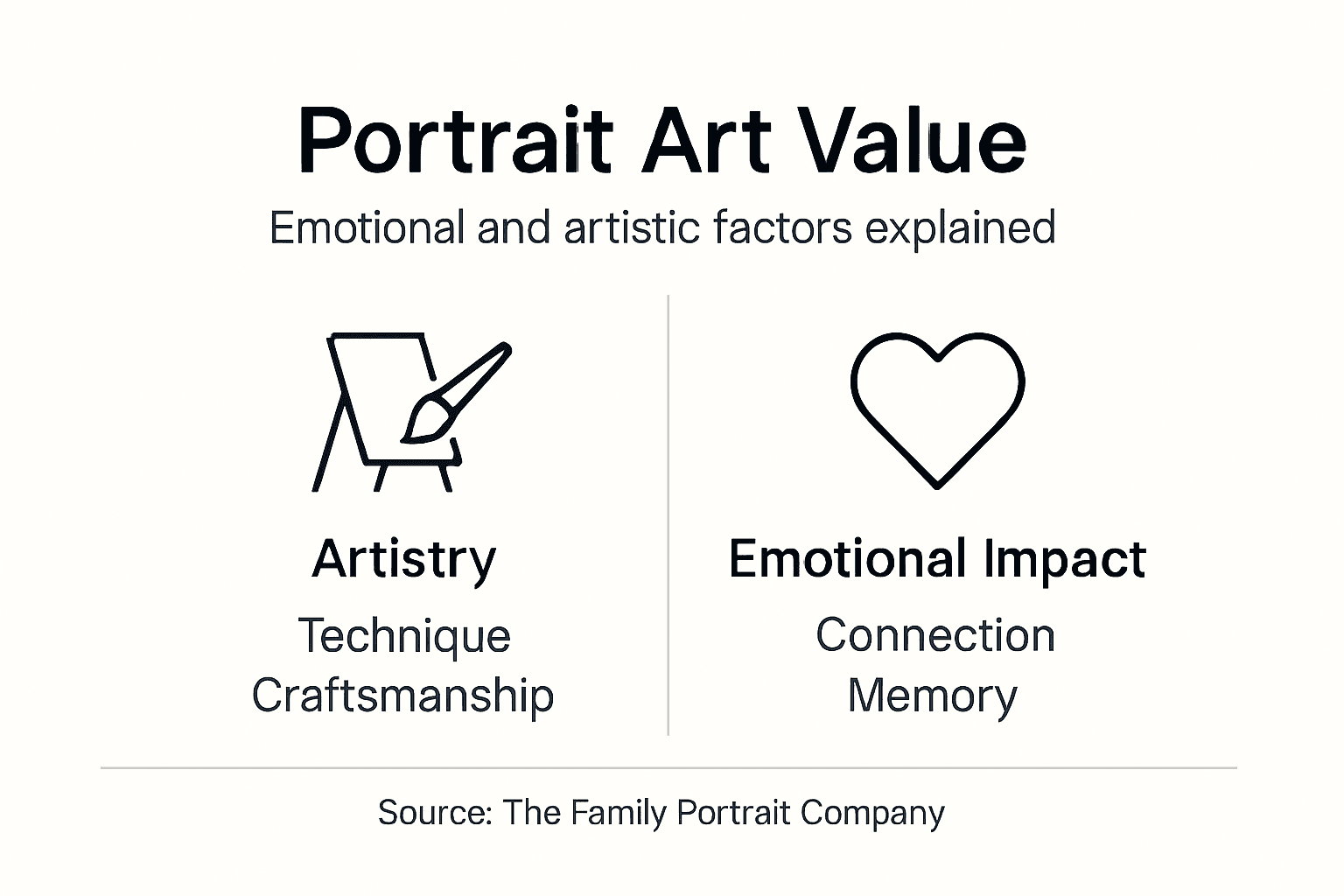
A skilled artist doesn’t just replicate features. They interpret them. They understand how light catches your dog’s coat. How their eyes convey personality. How posture communicates mood.
This technical mastery accumulates through deliberate practice and genuine artistic development. It’s visible in subtle choices—how brushstrokes suggest movement, how colour harmonies evoke feeling, how composition draws the viewer’s eye.
When evaluating an artist’s craftsmanship, examine:
- Detail handling: Fine details rendered with precision and purpose
- Colour harmony: Colours working together rather than competing
- Light quality: Convincing, directional illumination
- Proportional accuracy: Anatomically sound representation
- Expressive capability: Personality shining through execution
Your pet deserves an artist who combines all three elements: established reputation, quality materials, and masterful technique.
Here is a summary of factors that elevate a portrait from decorative art to a valuable heirloom:
| Factor | Effect on Value | Why It Matters |
|---|---|---|
| Artist reputation | Raises artistic and market worth | Signals proven skill |
| Quality materials | Ensures durability and vibrancy | Prevents fading or damage |
| Emotional resonance | Deepens personal significance | Makes art truly meaningful |
| Technical mastery | Enhances realism and expression | Distinguishes professionals |
Pro tip: Request detailed portfolio images showing close-ups of the artist’s brushwork, colour choices, and material quality—this reveals whether they genuinely invest in premium materials and possess the technical skill to justify their reputation.
Market Factors and Common Pricing Mistakes
Portrait pricing isn’t arbitrary. Market dynamics, demand patterns, and economic conditions all shape what commissions cost. Understanding these factors helps you recognise fair value versus inflated pricing.
Pet owners often make purchasing decisions based on gut feeling rather than market knowledge. This leads to overpaying for mediocre work or undervaluing exceptional artistry.
Understanding Market Dynamics
Market factors including demand, provenance, and economic trends heavily influence portrait valuations. The art market responds to broader economic conditions, seasonal demand fluctuations, and shifts in buyer preferences.
For custom pet portraits, this means timing and artist availability matter. A highly sought-after artist with months-long waiting lists can charge premium rates because demand exceeds supply. A newer artist building their portfolio may offer better value without sacrificing quality.
Key market factors affecting portrait pricing:
- Artist demand: How many commissions they receive monthly
- Geographic location: UK artists operate within regional market patterns
- Economic conditions: Disposable income and spending confidence
- Seasonality: Increased demand around holidays and gift-giving occasions
- Medium rarity: Specialised techniques command higher fees
- Commission complexity: Size, number of subjects, background detail
The UK Art Market Context
The UK art market operates under distinct conditions influenced by global sales trends and local tax implications. The UK is one of the world’s largest art markets, meaning competition exists at multiple price points.
This creates opportunity and confusion simultaneously. You can find talented artists at various price levels. Understanding where genuine value sits requires market awareness.
Fair portrait pricing balances artist reputation, materials quality, and market demand—not emotional attachment alone.
Common Pricing Mistakes
Pet owners repeatedly make predictable errors when commissioning portraits. Recognising these patterns protects both your budget and your satisfaction.
Frequent mistakes include:
- Underestimating reputation value: Assuming all artists at similar skill levels charge similarly
- Overlooking material quality: Focusing on price without considering archival longevity
- Ignoring market demand: Commissioning during peak seasons at premium rates
- Lacking clear documentation: No written agreement about deliverables or timelines
- Comparing commission to secondary markets: Conflating original commissions with resale prices
- Prioritising size over quality: Larger paintings cost more without guaranteeing better artistry
The most common error? Choosing based on lowest price. A £300 portrait from an inexperienced artist won’t serve you better than a £800 commission from someone who genuinely understands your pet’s personality.
Making Data-Driven Decisions
Rather than guessing, research actual market conditions. Review multiple artists’ portfolios and rates. Check reviews and testimonials. Request detailed breakdowns explaining pricing—materials, time investment, artist experience.
Understanding what you’re actually paying for prevents buyer’s remorse. A higher price reflecting superior materials, established reputation, and proven craftsmanship represents genuine value.
Pro tip: Request portfolio references showing previous pet commissions with client testimonials and photographs documenting the finished artwork in real homes—this reveals actual market value and helps you identify artists whose pricing genuinely reflects their capability.
Capture the True Value of Your Pet’s Portrait Today
Understanding what makes portrait art truly valuable means recognising the emotional connection and expert artistry behind each piece. Many pet owners struggle to find portraits that genuinely reflect their pet’s personality and preserve cherished memories with authenticity and technical mastery. Your investment deserves more than just an image — it deserves a lasting family heirloom crafted with premium materials and deep personal significance.
Discover the perfect balance of emotional resonance and artistic skill with our bespoke Dog Portraits and Cat Portraits.
Bring your pet’s unique spirit to life by choosing a custom portrait that stands the test of time. Visit The Family Portrait Company now to explore our collections and start commissioning a portrait that captures emotion, artistry and personality with precision. Make an investment today that transforms your pet’s photograph into a timeless treasure.
Frequently Asked Questions
What factors contribute to the value of a portrait?
The value of a portrait is influenced by emotional resonance, artistic skill, cultural significance, and its ability to preserve memory.
How does the choice of medium affect the emotional impact of a portrait?
Different mediums, such as oil painting or watercolour, generate distinct visual aesthetics and emotional tones. The choice of medium can enhance the portrait’s connection to the viewer.
Why is the artist’s reputation important when commissioning a portrait?
An artist’s reputation reflects their experience, technical skill, and consistency in delivering quality work, which can greatly influence the portrait’s overall value and emotional impact.
What emotional responses do portraits typically evoke in viewers?
Portraits can evoke recognition, comfort, preservation of memory, reflection, and pride, fostering a deep personal connection between the viewer and the depicted subject.
Recommended
- Why Choose Custom Portraits: Understanding Their Value – The Family Portrait Companys
- What Defines Pet Portraiture: Understanding the Art – The Family Portrait Companys
- Understanding Why Custom Portraits Last Through Time – The Family Portrait Companys
- Role of Artist in Portrait Creation – Why It Matters – The Family Portrait Companys